





What's Happening?
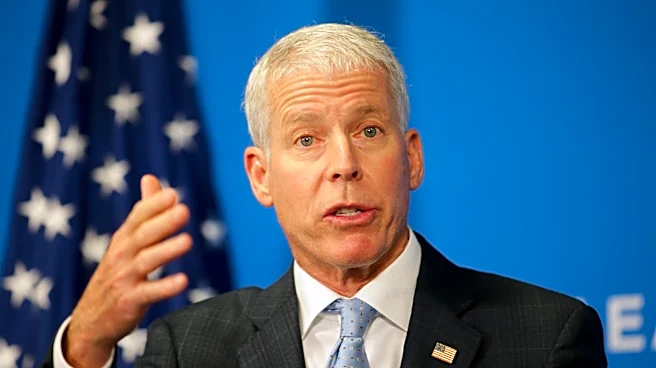
Congressman Brad Finstad, a Republican, recently met with Minnesota biofuel leaders and farmers to discuss the expansion of domestic energy production and year-round sales of E15 fuel. The discussions took place during a roundtable event hosted with the Minnesota Biofuels
Association and Guardian Energy. Following the roundtable, Congressman Finstad toured Guardian Energy's ethanol facility in Janesville, which is currently undergoing a significant construction project to add a new grain bin with a 2.3-million-bushel capacity. During his visit, Finstad emphasized his commitment to pushing for the passage of a new Farm Bill and advocating for nationwide, year-round sales of E15. This initiative aims to bolster the agricultural sector and enhance energy independence through increased biofuel utilization.
Why It's Important?
The push for year-round E15 sales and a new Farm Bill by Congressman Finstad carries significant implications for both the agricultural and energy sectors in the U.S. Expanding E15 sales nationwide would provide a more stable and larger market for ethanol producers, directly benefiting corn farmers who supply the raw material. This could lead to increased demand for corn, potentially stabilizing or raising commodity prices, which is crucial for the economic viability of many farming communities. Furthermore, greater reliance on biofuels like E15 contributes to domestic energy production, reducing dependence on foreign oil and enhancing national energy security. The new Farm Bill, a comprehensive piece of legislation, will shape agricultural policy, subsidies, and conservation efforts, directly impacting farmers' livelihoods and the future of sustainable farming practices. For consumers, wider availability of E15 could offer a more affordable fuel option, though its environmental impact and compatibility with all vehicles remain subjects of ongoing discussion.
What's Next?
Congressman Finstad's advocacy suggests that legislative efforts to pass a new Farm Bill and expand year-round E15 sales will continue in Congress. The ongoing construction at Guardian Energy's ethanol facility indicates a commitment from the industry to increase production capacity, anticipating potential policy changes that would favor biofuels. Stakeholders, including agricultural groups, biofuel producers, and environmental organizations, will likely intensify their lobbying efforts as these legislative discussions progress. The U.S. Environmental Protection Agency (EPA) would also play a crucial role in implementing any changes to E15 regulations. The outcome of these efforts could lead to significant shifts in the energy market, agricultural subsidies, and environmental policies, impacting fuel prices, farming incomes, and the nation's carbon footprint.
Beyond the Headlines
The debate over E15 and biofuel production extends beyond immediate economic benefits, touching upon broader environmental and technological considerations. While biofuels are often promoted as a cleaner alternative to fossil fuels, their production involves complex environmental trade-offs, including land use, water consumption, and the energy required for cultivation and processing. The push for E15 also highlights the ongoing tension between traditional fossil fuel industries and the burgeoning renewable energy sector. Furthermore, the discussion around the Farm Bill often brings to light the intricate balance between supporting agricultural communities, ensuring food security, and promoting sustainable land management practices. The long-term implications of these policies could influence the trajectory of rural economies, the adoption of green technologies, and the overall health of the environment, shaping the future of American energy and agriculture for decades to come.