






What's Happening?
The United States and Iran have concluded high-level talks in Islamabad without reaching an agreement on Iran's nuclear program. The discussions, which lasted 21 hours, were the most significant diplomatic engagement between the two nations since 1979.
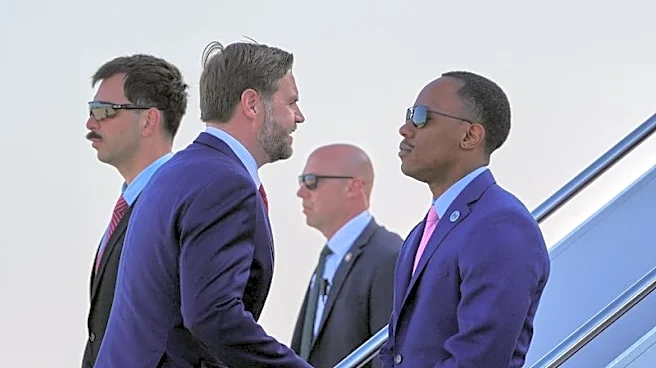
The U.S. delegation, led by Vice President JD Vance, sought a firm commitment from Iran to halt its nuclear weapon development, while Iran maintained its stance on pursuing a nuclear power program. Despite exchanging technical papers, the two sides remained divided, particularly on the issue of uranium enrichment. Iran's recent increase in uranium enrichment has raised concerns in the West and was a catalyst for a conflict with Israel last year. The talks ended with the U.S. presenting its 'best and final' offer, leaving the next move to Iran.
Why It's Important?
The failure of the talks underscores the ongoing tension between the U.S. and Iran, with significant implications for international security and diplomacy. The inability to reach an agreement may exacerbate regional instability, particularly in the Middle East, where Iran's nuclear ambitions are a point of contention. The U.S. seeks to prevent Iran from developing nuclear weapons, which could alter the balance of power in the region and potentially lead to further conflicts. The outcome of these talks could influence global economic conditions, as uncertainty in the region often impacts oil prices and international trade. The diplomatic stalemate also highlights the challenges in negotiating with Iran, which has historically been resistant to external pressure.
What's Next?
With the U.S. having made its final offer, the ball is now in Iran's court to decide whether to alter its position. Future negotiations may depend on Iran's willingness to compromise on its nuclear enrichment activities. The international community will be closely monitoring Iran's response, as well as any potential shifts in U.S. policy under President Trump. The possibility of renewed tensions or military actions remains, especially if Iran continues to advance its nuclear capabilities. Stakeholders, including regional allies and global powers, may need to reassess their strategies in dealing with Iran.