






What's Happening?
The prediction site Polymarket has referred dozens of accounts exhibiting signs of potential military insider trading to the Justice Department for investigation, according to a senior company official. These referrals, which predate a recent watchdog
report, concern 152 accounts identified by the nonpartisan Anti-Corruption Data Collective. This group analyzed publicly available Polymarket data and found that these accounts collectively profited approximately $8 million from war markets, including those related to the Iran war, displaying several hallmarks of insider activity. The flagged accounts often involved brand-new wallets placing remarkably well-timed bets with a staggering 97% win rate, a pattern indicative of insider trading. Polymarket's founder and CEO, Shayne Coplan, addressed the company's efforts to combat insider trading at a Commodity Futures Trading Commission meeting, highlighting their internal surveillance tools and the recent hiring of a former FBI official to build proprietary software for monitoring. War markets are illegal under U.S. law but remain accessible on Polymarket's offshore site.
Why It's Important?
This development is highly significant due to its implications for national security and the integrity of financial markets. The potential for military insider trading on prediction platforms poses a serious threat by allowing individuals with privileged information about sensitive geopolitical events to profit, which could incentivize corruption within the military and compromise classified information. Lawmakers and a bipartisan coalition of state attorneys general are increasingly concerned that such markets could inadvertently tip off adversaries and undermine the U.S. national security infrastructure. The referrals by Polymarket, even if predating the watchdog report, underscore the growing recognition of this issue within the industry. This situation highlights the challenges regulators face in overseeing decentralized and offshore prediction markets, which operate in a legal gray area and can have profound real-world consequences beyond financial speculation.
What's Next?
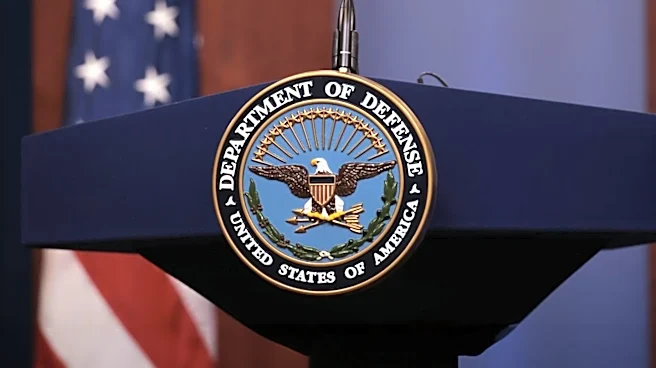
The Justice Department is expected to investigate the dozens of potential military insider trading cases referred by Polymarket. This investigation will likely involve scrutinizing the flagged accounts and their trading patterns to determine if illegal activities occurred. The Commodity Futures Trading Commission (CFTC) is already investigating Polymarket's operations, and the House Oversight Committee is also examining insider trading on prediction markets. These ongoing inquiries, coupled with the new referrals, could lead to increased regulatory pressure and potentially new legislation aimed at tightening oversight of prediction platforms, especially those offering markets on sensitive geopolitical events. Major stakeholders, including Polymarket, other prediction market operators, and government agencies, will be closely watching the outcomes of these investigations, which could redefine the legal and operational landscape for the entire prediction market industry.
Beyond the Headlines
The issue of military insider trading on prediction markets delves into profound ethical and legal dilemmas. It exposes a vulnerability where the pursuit of financial gain could directly jeopardize national security and public trust. The existence of 'war markets' on offshore platforms, despite being illegal in the U.S., raises questions about the effectiveness of current regulatory frameworks in a globalized digital economy. This situation highlights the ethical responsibility of technology companies to prevent their platforms from being exploited for illicit activities that could have severe societal consequences. Furthermore, it underscores the tension between free market principles and the imperative to protect national interests, particularly in an era where information asymmetry can be rapidly monetized. The long-term implications could include a re-evaluation of how intelligence is protected and how financial markets are regulated to prevent the weaponization of sensitive information.