
What's Happening?
In Rio de Janeiro's Flamengo Park, talipot palm trees are flowering for the first and only time in their decades-long lifespan. These trees, introduced by landscape architect Roberto Burle Marx in the 1960s,
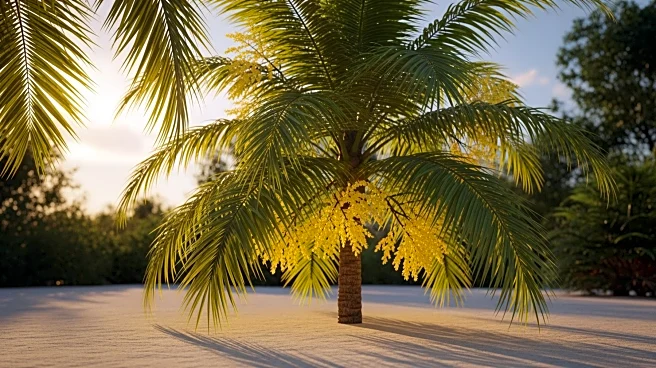
are native to India and Sri Lanka. The flowering event, which occurs at the end of the palm's life, features a central plume with millions of creamy-white blossoms. This rare phenomenon has attracted the attention of park visitors, who are eager to witness and photograph the spectacle. The flowering of these palms is a significant botanical event, highlighting the unique lifecycle of the talipot palm.
Why It's Important?
The flowering of the talipot palms in Rio de Janeiro is a rare and significant event, drawing attention to the importance of preserving botanical diversity. This phenomenon not only captivates the public but also serves as a reminder of the intricate and often lengthy lifecycles of certain plant species. The event underscores the value of botanical gardens and parks in conserving plant species and providing educational opportunities for the public. Additionally, it highlights the role of landscape architecture in enhancing urban environments and fostering a connection between people and nature. The flowering of these palms may inspire further interest in plant conservation and environmental stewardship.