

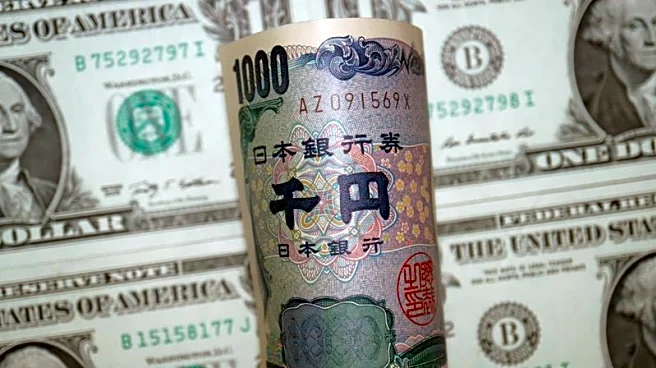


What's Happening?
The Bank of Japan recently increased its policy rate, yet the Japanese Yen continues to weaken, nearing the status of the Turkish Lira as one of the weakest currencies globally. This decline is attributed to Japan's long-term interest rates, which remain
too low given the country's substantial public debt. The Bank of Japan's ongoing purchase of government debt is preventing yields from rising to their true market level, which would otherwise lead to a debt crisis. The situation presents Japan with a choice between a debt crisis and continued currency debasement. Despite the potential for fiscal consolidation through asset sales and privatization, there is currently no political consensus to pursue these measures.
Why It's Important?
The weakening of the Yen has significant implications for Japan's economy and its trading partners. A continued decline in the Yen's value could lead to increased import costs, affecting consumer prices and potentially leading to inflationary pressures. For the U.S., a weaker Yen could impact trade balances and competitiveness, as Japanese goods become cheaper in comparison. Additionally, the situation highlights the challenges faced by economies with high public debt and low interest rates, raising concerns about financial stability and the effectiveness of monetary policy in addressing such issues.
What's Next?
If the current trend continues, Japan may face increased pressure to implement fiscal reforms to stabilize its economy. This could involve difficult political decisions, such as reducing public debt through asset sales or privatization. The international community, including the U.S., will likely monitor these developments closely, as they could have broader implications for global financial markets and economic stability.