



What's Happening?
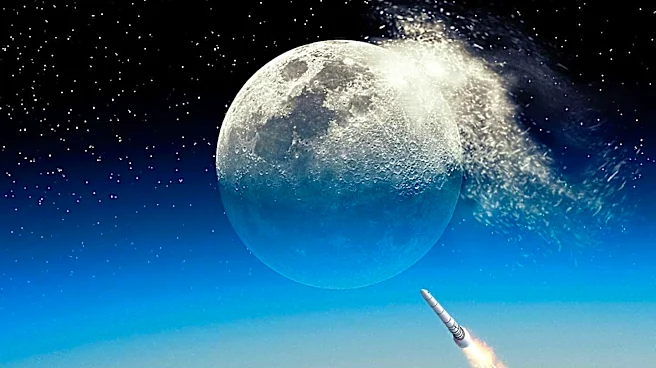
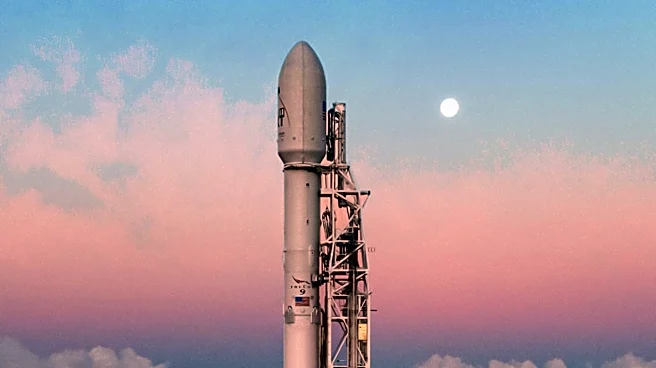
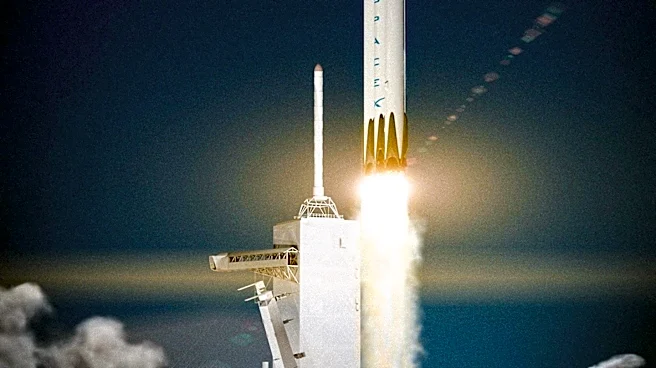
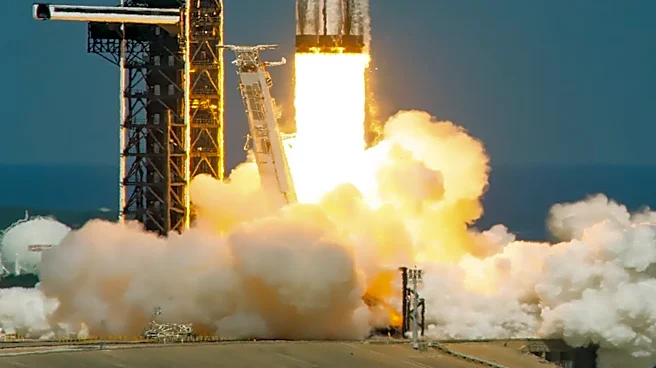
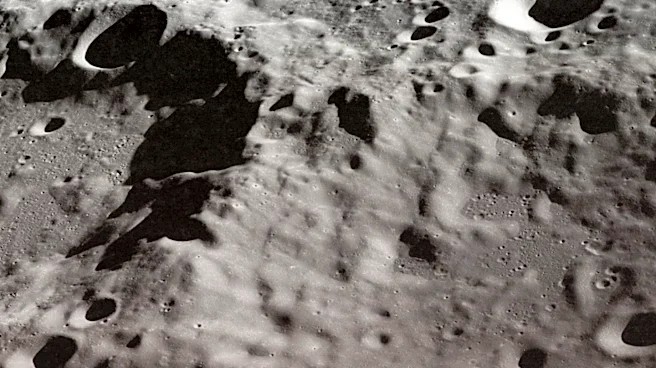
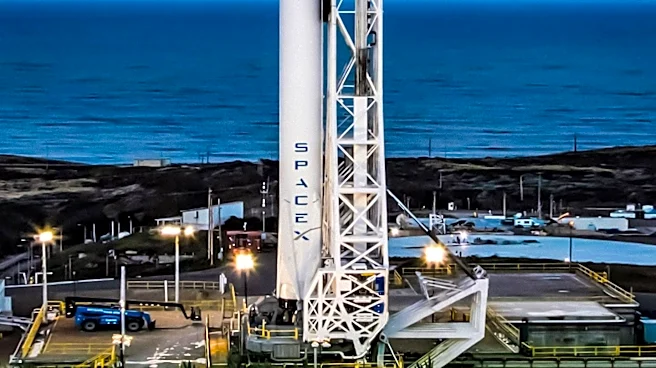
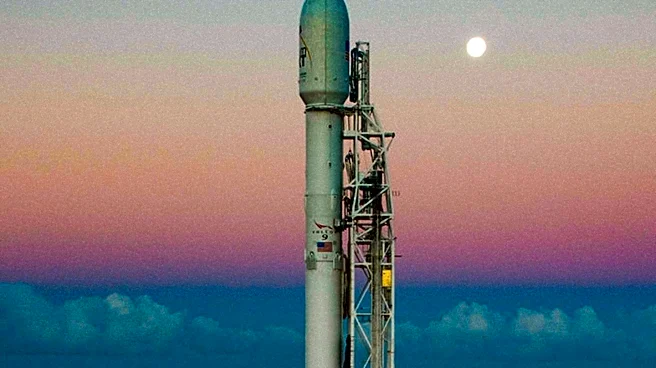
A SpaceX Falcon 9 upper stage collided with the Moon near Einstein Crater on August 5, 2026. The impact was confirmed by NASA researcher Kelsey Young. The four-metric-ton vehicle, which was part of NASA's Commercial Lunar Payload Services program, had
been in an uncontrolled orbit for over eighteen months before striking the lunar surface at a speed of 2.43 kilometers per second. The collision was tracked by astronomer Bill Gray and monitored by NASA and SpaceX. Although no spacecraft captured high-resolution images of the impact, South Korea's Danuri orbiter took images of the region before and after the event. Ground-based observatories, including the European Southern Observatory's Very Large Telescope, detected sodium and lithium gas plumes from the impact site.
Why It's Important?
The collision highlights the growing issue of space debris as lunar missions increase. Unintentional impacts, like this one, are becoming more frequent, raising concerns about the management of human-made debris on the Moon. The incident underscores the need for formalized disposal protocols to prevent future unplanned impacts. Such protocols are crucial as space agencies and private companies expand their lunar activities. The data from these impacts can provide valuable scientific insights, but the potential for damage to lunar infrastructure and scientific instruments necessitates careful management.
What's Next?
NASA and SpaceX are in discussions to establish formalized protocols for the disposal of space debris to prevent future unplanned impacts on the Moon. This initiative is part of a broader effort to manage the increasing amount of human-made debris in space. The ongoing analysis of the collision's aftermath will continue, with researchers examining secondary imaging data to identify additional signatures within the debris cloud. These efforts aim to mitigate the risks associated with increased orbital activity and ensure the safety and sustainability of future lunar missions.
Beyond the Headlines
The incident raises ethical and environmental questions about humanity's responsibility in space exploration. As lunar missions become more frequent, the potential for environmental impact on the Moon's surface increases. The need for international cooperation and regulation in space activities is becoming more apparent, as the actions of one entity can have far-reaching consequences. The development of sustainable practices in space exploration is essential to preserve the integrity of celestial bodies and ensure the long-term viability of space missions.