


What's Happening?
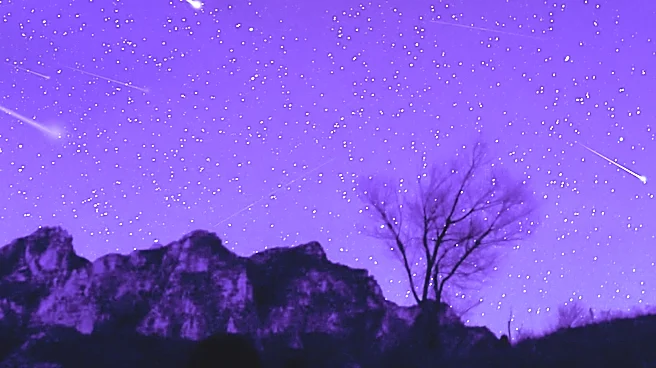
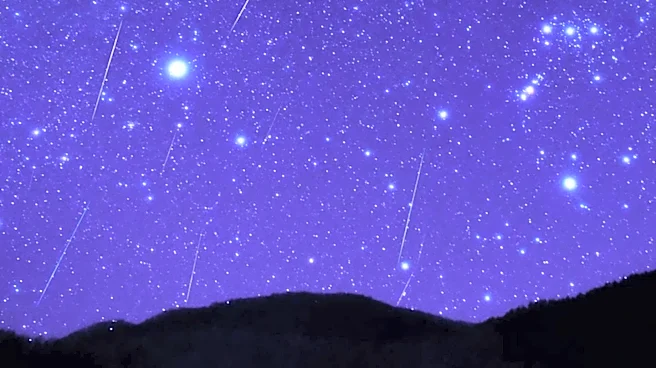
The Perseids meteor shower, one of the most anticipated astronomical events, is set to peak on the night of August 12th and the early morning of August 13th, 2026. This year, the event is particularly special due to the absence of moonlight, as the new
moon coincides with the peak, providing optimal viewing conditions. The Perseids, known for their bright meteors, are expected to produce up to 100 meteors per hour under ideal conditions. The shower is caused by Earth passing through debris left by comet 109P/Swift-Tuttle. Observers are advised to find a dark location away from city lights and allow their eyes to adjust to the darkness for the best experience.
Why It's Important?
The Perseids meteor shower is a significant event for both amateur and professional astronomers, offering a spectacular natural display that can be enjoyed by the public. The absence of moonlight this year enhances visibility, making it an excellent opportunity for educational outreach and public engagement in astronomy. The event also provides scientists with a chance to study meteoroid composition and behavior as they enter Earth's atmosphere. For the general public, it is a chance to connect with the cosmos and appreciate the natural wonders of the universe.
What's Next?
Following the peak, the Perseids will continue to be visible until August 24th, though at a reduced rate. Astronomers and enthusiasts will continue to monitor the shower, and data collected may contribute to ongoing research on meteoroid streams and their impact on Earth's atmosphere. Public interest in astronomy is likely to be bolstered by such events, potentially inspiring future generations of scientists.