








What's Happening?
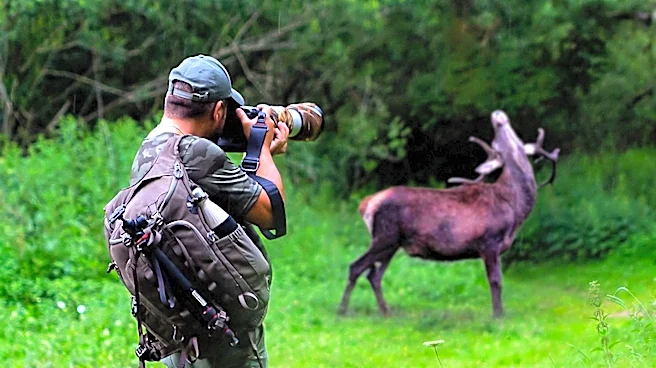
A study published in the journal Biological Conservation reveals that wildlife in high-use areas of Wyoming's Bridger-Teton National Forest are less likely to be disturbed by human activities compared to those in more remote areas. Researchers used motion-triggered
speakers to play sounds of hikers and bikers, observing the reactions of animals like elk and deer. The study found that animals in busier areas were 22% less likely to flee, suggesting they may be habituating to human presence. This research could inform land management strategies, potentially guiding the development of new trails in areas where wildlife is already accustomed to human activity.
Why It's Important?
Understanding how wildlife responds to human presence is crucial for developing effective conservation strategies and managing human-wildlife interactions. The study's findings suggest that animals in popular recreation areas may adapt to human activities, which could influence decisions on where to concentrate recreational infrastructure. This knowledge can help balance the needs of wildlife conservation with recreational use, ensuring that sensitive species are protected while allowing for sustainable human enjoyment of natural areas.
What's Next?
The study's results may lead to changes in how land managers plan and develop recreational areas. By focusing on areas where wildlife is already less disturbed by human activity, managers can minimize the impact on sensitive species. Further research could explore the long-term effects of human habituation on wildlife behavior and health, providing deeper insights into the dynamics of human-wildlife coexistence.