








What's Happening?
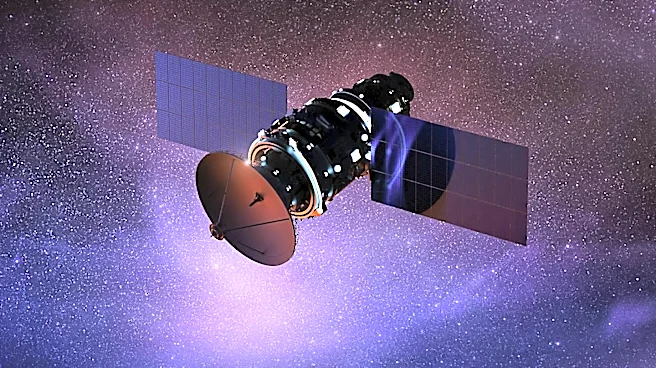
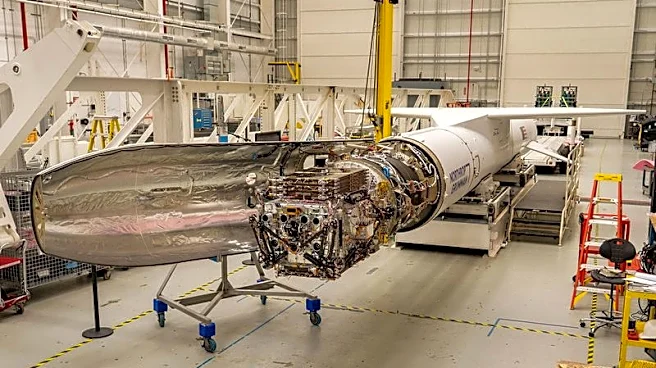
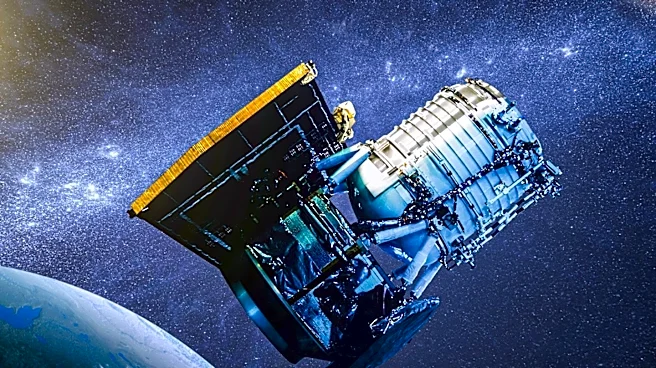
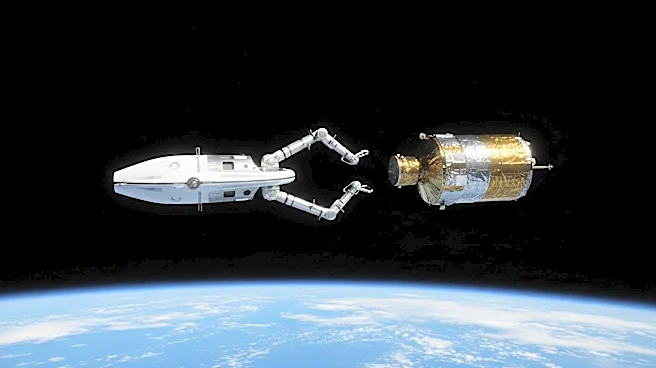
The launch of Katalyst Space's LINK spacecraft, intended to boost the orbit of NASA's Neil Gehrels Swift Observatory, has been postponed due to adverse weather conditions. The mission, which was scheduled to launch from the Marshall Islands using Northrop
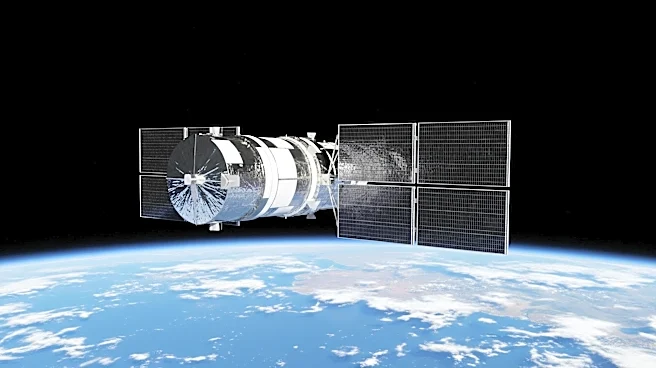
Grumman's Pegasus XL rocket, aims to enhance the observatory's capabilities. The next launch attempt is planned for July 1, 2026. The Swift Observatory plays a crucial role in observing gamma-ray bursts and other high-energy astronomical phenomena, and the boost mission is expected to extend its operational life.
Why It's Important?
Delays in space missions due to weather highlight the challenges of space exploration and the need for precise conditions for successful launches. The Swift Observatory is a vital tool for astronomers studying gamma-ray bursts, which are among the most energetic events in the universe. Extending its operational life through this boost mission will allow scientists to continue gathering valuable data, contributing to our understanding of the universe's most extreme phenomena. The mission also underscores the importance of international collaboration in space exploration, as it involves multiple stakeholders and technologies.
What's Next?
The rescheduled launch is set for July 1, 2026, pending favorable weather conditions. If successful, the boost mission will enhance the Swift Observatory's orbit, allowing it to continue its scientific observations. The mission's progress will be closely monitored by NASA and its partners, with updates provided through NASA's Swift blog. The scientific community eagerly anticipates the extended capabilities of the observatory, which will support ongoing and future research in high-energy astrophysics.