




What's Happening?
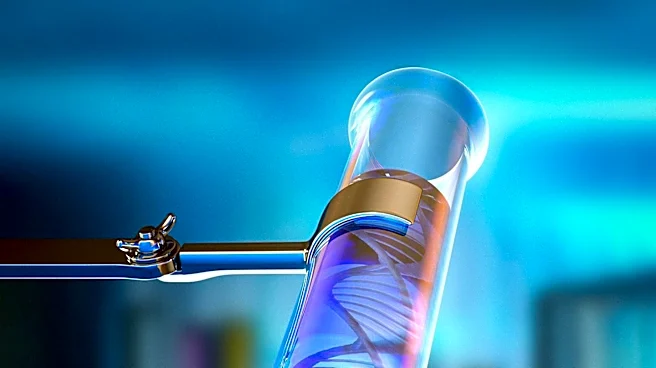
Research at the University of New England (UNE) is exploring a nature-inspired additive to improve cryopreservation, the process of freezing living biological material for storage and later use. Ph.D. student Michael Foster, alongside Dr. Brendan Wilkinson
and colleagues, is developing a new cryoprotectant to reduce damage during freezing and thawing. Current cryoprotectants, such as dimethyl sulfoxide (DMSO), can be toxic or incompatible with certain cell types. Foster's approach involves modifying naturally protective molecules, like sugars and amino acids found in organisms that survive extreme cold, to create a single compound with multiple cryoprotective properties. This research, published in the Journal of Materials Chemistry B, aims to overcome the limitations of existing methods and enhance the viability of cells and tissues after thawing.
Why It's Important?
This research holds significant implications for various U.S. sectors, including healthcare, biotechnology, and conservation. Improved cryopreservation techniques could revolutionize organ transplantation by allowing organs to remain viable for much longer periods, increasing the window for finding suitable recipients and transporting organs over greater distances. This could lead to a substantial reduction in organ transplant waiting lists and save lives. In fertility treatment, better cryoprotectants could enhance the success rates of storing sperm, eggs, and embryos. Furthermore, in biodiversity conservation, advanced cryopreservation can create more effective genetic banks for threatened species, supporting breeding programs and preserving genetic diversity, which is crucial for ecological stability and future scientific research.
What's Next?
While the research is in its early stages, the next steps involve further development and testing of these nature-inspired molecules. The goal is to move towards clinical applications, though this is acknowledged to be a long-term endeavor. Future work will also need to address improvements in freezing and thawing technologies, the delivery of cryoprotectants into complex tissues and organs, biological testing, engineering, and eventually, clinical or regulatory translation. The success of this research could pave the way for new technologies that fundamentally change transplant medicine and significantly advance efforts in fertility treatment and biodiversity conservation, requiring continued collaboration among researchers, medical professionals, and regulatory bodies.
Beyond the Headlines
The development of more effective cryoprotectants touches upon deeper ethical and societal considerations. The ability to preserve organs for extended periods could lead to discussions about organ banking, potentially altering the dynamics of organ donation and allocation. For fertility treatments, enhanced cryopreservation could expand options for family planning and reproductive health, raising questions about access and equity. In conservation, the capacity to store genetic material from threatened species offers a powerful tool against extinction, but also prompts reflection on humanity's role in preserving biodiversity and the ethical responsibilities associated with genetic manipulation and reintroduction programs. This research underscores the intricate balance between scientific advancement, ethical stewardship, and societal impact.