

What's Happening?
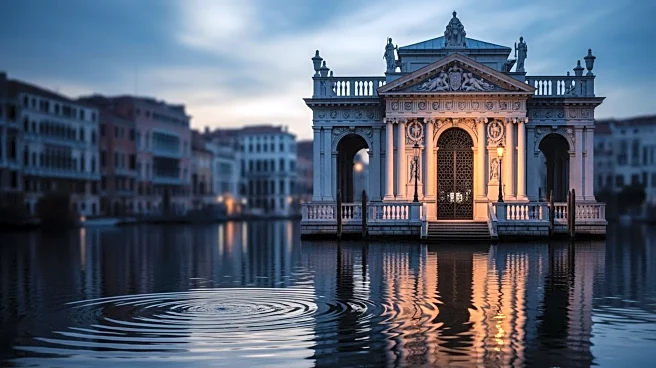
The mayor of Venice, Luigi Brugnaro, has announced that Russia's pavilion at the Venice Biennale will be closed if it engages in propaganda. This statement comes amid tensions surrounding Russia's participation in the event, marking its first appearance
since the invasion of Ukraine in 2022. The Biennale's president, Pietrangelo Buttafuoco, and Italy's culture minister, Alessandro Giuli, have been in disagreement over Russia's involvement, which includes a musical program of folklore and world music. The European Union has threatened to withdraw funding if Russia participates, prompting calls for transparency and adherence to sanctions. Despite these tensions, Brugnaro emphasized the importance of maintaining Venice as a place for diplomacy and openness, distinguishing between the Russian government and its people.
Why It's Important?
The potential closure of Russia's pavilion at the Venice Biennale highlights the ongoing geopolitical tensions between Russia and Western nations, particularly in cultural and artistic forums. The Biennale, a prestigious international art exhibition, serves as a platform for cultural diplomacy and dialogue. The involvement of Russia, despite its controversial actions in Ukraine, raises questions about the role of art in political discourse and the limits of cultural engagement. The situation underscores the challenges faced by international cultural events in navigating political sensitivities and maintaining neutrality while adhering to international sanctions and ethical standards.
What's Next?
The Biennale organizers and Italian cultural authorities are likely to face increased scrutiny regarding their handling of Russia's participation. The demand for full documentation of the Russian pavilion's plans and compliance with sanctions will be critical in determining the pavilion's future. Additionally, the Biennale's commitment to hosting a space for dissident artists and philosophical discussions may attract further attention and debate. Stakeholders, including artists, cultural institutions, and political entities, will be closely monitoring the developments, which could influence future cultural collaborations and the Biennale's reputation as a forum for open dialogue.
Beyond the Headlines
The controversy surrounding Russia's participation at the Venice Biennale reflects broader issues of censorship and artistic freedom. The involvement of groups like Pussy Riot, who have been censored in Russia, highlights the tension between state narratives and dissenting voices. The Biennale's efforts to include dissident artists and discussions on censorship may serve as a litmus test for the event's commitment to artistic freedom and its ability to navigate complex political landscapes. This situation may also prompt other international cultural events to reassess their policies on participation and representation in light of geopolitical conflicts.