







What's Happening?
A recent social media post by NowThis Impact claimed that 15,000 U.S. farms were forced to close in 2025 due to pressure from data centers. This assertion has been questioned by a commenter who clarified that while the USDA did report approximately 15,000 fewer
farms in 2025 compared to 2024, the statistics do not confirm that all these farms were forced to close, nor do they establish a direct causal link to data center development. The original post featured Ohio farmer Leslie Nogle's crop art protesting data centers, with a sign reading, 'Not for sale to data centers.' Nogle, whose area has a moratorium on data centers, noted that other regions are 'having a real battle' with data centers acquiring farmland. The Cincinnati Enquirer reported that Ohio ranks fifth nationally in data centers, with 18 municipalities addressing related initiatives on their November 3 ballots. Public sentiment on platforms like TikTok shows strong opposition, with users expressing concerns about the loss of farmland and the sheer scale of these facilities.
Why It's Important?
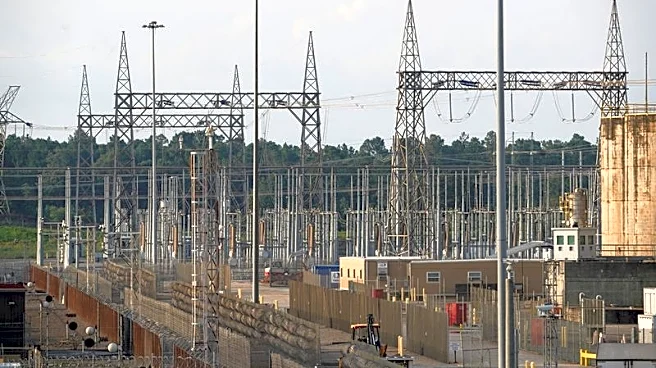
The debate over the decline in U.S. farms and the role of data centers highlights a growing tension between agricultural preservation and technological expansion. The potential loss of farmland to industrial development raises concerns about food security, rural economies, and environmental impact. While data centers bring economic investment and technological infrastructure, their significant land and resource demands, particularly for water and power, are increasingly scrutinized. Local communities are grappling with these trade-offs, leading to disputes and legislative actions, such as Caroline County, Virginia, using eminent domain for data center water, and Skagit County, Washington, considering a data center ban. The controversy underscores a broader national discussion about land use priorities and the long-term sustainability of both agricultural and technological sectors in the U.S.
What's Next?
The ongoing debate is likely to intensify as more communities face proposals for data center developments. Local governments and state legislatures will continue to weigh the economic benefits of data centers against concerns over farmland loss, water usage, and energy demands. This could lead to more moratoriums, bans, or stricter regulations on data center siting and operations, similar to those being considered in Washington and Utah. Public advocacy and social media campaigns against data centers are also expected to grow, influencing political discourse and policy decisions. Farmers and agricultural organizations may increase their lobbying efforts to protect farmland, potentially seeking federal or state protections. The technology industry, in turn, may need to address these concerns by exploring more sustainable development practices or alternative locations for their facilities to mitigate community opposition.
Beyond the Headlines
Beyond the immediate land use conflicts, this issue touches upon fundamental questions about national priorities and the future of rural America. The narrative of 'farms versus data centers' symbolizes a clash between traditional economic activities and the demands of the digital age. It raises ethical considerations about the value placed on agricultural land and the potential for irreversible changes to rural landscapes and livelihoods. The extensive resource requirements of data centers, particularly for water and electricity, also highlight broader environmental sustainability challenges. This situation could trigger long-term shifts in land use policy, potentially leading to more integrated planning that balances agricultural needs with technological growth. It also underscores the power of social media in shaping public perception and mobilizing opposition against large-scale industrial projects, influencing how future infrastructure developments are perceived and approved.