


What's Happening?
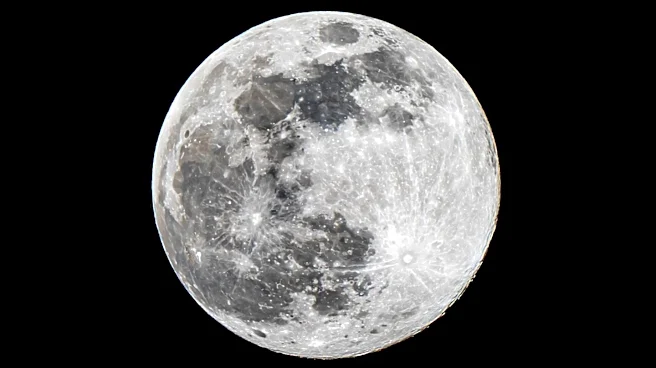
A SpaceX rocket, which had been adrift for over a year, collided with the moon as predicted, creating a debris plume observed by a telescope in Chile. The collision, which occurred at a speed of 5,400 mph, is part of a growing issue of lunar litter as space
exploration intensifies. This incident follows a similar event in 2022 when a Chinese rocket unintentionally hit the moon. SpaceX is collaborating with NASA to prevent future occurrences, emphasizing that the crash was accidental due to solar activity and gravitational forces. The collision site is near Einstein Crater, a location difficult to observe from Earth.
Why It's Important?
The collision underscores the increasing problem of space debris as more countries and private companies engage in lunar exploration. As the U.S. and China race to establish a presence on the moon, the risk of unintended impacts and debris accumulation grows. This raises concerns about the sustainability of space exploration and the potential hazards posed to future missions. The incident highlights the need for international cooperation and regulation to manage space debris and ensure the safety of ongoing and future lunar activities. The event also serves as a reminder of the challenges in balancing technological advancement with environmental stewardship in space.
What's Next?
NASA's Lunar Reconnaissance Orbiter is expected to provide visual confirmation of the impact site in the coming weeks. This will help assess the extent of the damage and inform future strategies for debris management. As lunar exploration continues to expand, there will likely be increased efforts to develop guidelines and technologies to mitigate the risks associated with space debris. The incident may prompt discussions among international space agencies and private companies to establish protocols for responsible exploration and debris mitigation, ensuring the long-term sustainability of lunar and space activities.