







What's Happening?
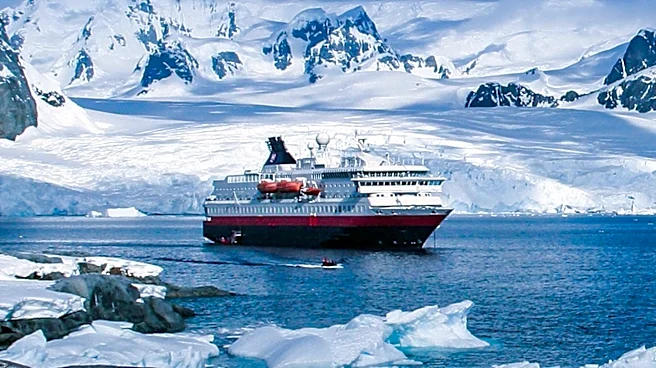
China has launched a significant Arctic expedition for the second consecutive year, involving four research vessels. The mission, which began last week, includes three research icebreakers—Xuelong, Xuelong 2, and Jidi—departing from Dalian for a four-month
journey in the Arctic Ocean. The multifunctional research vessel Tansuo 3 is expected to join them later. This expedition aims to build on previous studies of global climate change impacts in the Arctic and explore seafloor spreading mechanisms around the Gakkel Ridge. China's Ministry of Natural Resources highlights the importance of these expeditions in understanding and protecting the Arctic region. The mission also involves collaboration with Russian and German scientists on joint projects.
Why It's Important?
China's expanding Arctic expeditions reflect its growing interests in the region, both scientifically and economically. The Arctic's opening presents new opportunities for energy diversification, particularly in light of disruptions in the global LNG trade. China's construction of a second LNG terminal in Shandong province to handle Russian Arctic LNG 2 project cargoes underscores this shift. Additionally, Chinese companies are pioneering Arctic shipping routes, with plans to increase container ship voyages through the Northern Sea Route. These developments could significantly impact global energy markets and shipping industries, positioning China as a key player in Arctic exploration and resource utilization.
What's Next?
The ongoing Arctic expedition is expected to yield valuable scientific data and strengthen international collaborations, particularly with Russian and German researchers. As China continues to invest in Arctic infrastructure and shipping routes, it may face geopolitical challenges and environmental concerns. The success of these expeditions could influence future policies on Arctic exploration and resource management. Additionally, the EU's upcoming Arctic expedition, set to launch from Norway, indicates a growing international focus on the region, potentially leading to increased competition and cooperation in Arctic research and development.
Beyond the Headlines
China's Arctic ambitions raise questions about the long-term environmental impact of increased human activity in the region. The balance between scientific exploration and resource exploitation will be crucial in ensuring sustainable development. Furthermore, China's collaboration with Russia and Germany highlights the geopolitical dynamics at play, as countries vie for influence in the Arctic. The region's strategic importance, coupled with its rich natural resources, could lead to shifts in global power structures and international relations.