




What's Happening?
SiPearl, a European designer of high-performance, energy-efficient CPUs, has delivered the initial samples of its Rhea1 processor to Bull, a prominent company in advanced computing and AI. This delivery marks a significant step in Europe's efforts to achieve
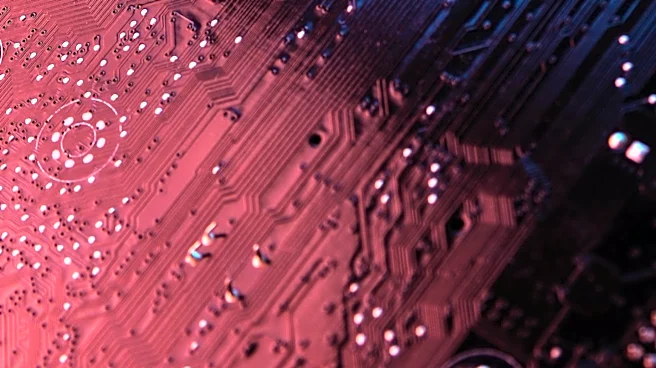
technological sovereignty in advanced computing and artificial intelligence. The Rhea1 CPU is slated for integration into Bull's BullSequana XH3000 platform, which will power JUPITER, Europe's first exascale supercomputer. JUPITER, procured by the EuroHPC Joint Undertaking, is hosted at the Jülich Supercomputing Centre (JSC) in Germany. The Rhea1 CPU is designed with 80 Arm Neoverse V1 cores, 2 x 256-bit Scalable Vector Extension, 4 stacks of HBM, and 4 DDR5 interfaces, making it suitable for demanding High-Performance Computing (HPC) workloads while emphasizing security, energy efficiency, and flexibility. Early benchmarking results for Rhea1 are reportedly exceeding expectations, with performance figures to be published in the autumn. This initial order for Rhea1 represents SiPearl's first significant revenue.
Why It's Important?
This development is crucial for Europe's technological independence, as it signifies the deployment of a European-designed processor within a European-built supercomputing platform. The JUPITER supercomputer, equipped with Rhea1, is expected to dramatically improve capabilities in various critical fields, including extreme weather forecasting, climate science, sustainable energy research, AI development, quantum research, and structural biology. This will empower researchers, industries, and public organizations across Europe to drive innovation on an unprecedented scale. The integration of Rhea1 into JUPITER's Cluster Module, complementing its GPU-based Booster, will provide a CPU-based architecture optimized for a wide range of complex and data-intensive workloads, particularly those benefiting from high memory bandwidth. This initiative demonstrates Europe's capacity to unite research, industry, and world-class infrastructure to foster a robust European HPC ecosystem, reducing reliance on external technologies for strategic computing needs.
What's Next?
Bull has commenced the integration of the Rhea1 CPUs into its BullSequana XH3000 platform for JUPITER. This integration will contribute to the development of JUPITER's CPU blade, paving the way for the full modular integration of the exascale machine. Performance figures from the ongoing benchmarking phases at SiPearl's laboratories are expected to be consolidated and published in the autumn. The JUPITER supercomputer, once fully operational, will be made available to the scientific community across Europe, enabling advancements in various research domains. SiPearl's future plans include the release of its second-generation CPU, Rhea2, which is intended for integration into another European exascale supercomputer, Alice Recoque, in France. This ongoing development underscores a sustained commitment to strengthening Europe's digital sovereignty and HPC capabilities.
Beyond the Headlines
The delivery of the Rhea1 CPU samples extends beyond a mere technological achievement; it represents a significant stride towards digital sovereignty for Europe. By developing and deploying its own high-performance processors, Europe aims to mitigate potential security risks associated with reliance on foreign technology, ensuring 'back-door free and kill switch free security' for its critical computing infrastructure. This initiative also fosters a stronger European High-Performance Computing (HPC) and AI ecosystem, promoting collaboration between European tech players and strengthening the region's competitive edge in advanced computing. The emphasis on energy efficiency in Rhea1's design also highlights a commitment to sustainable computing, aligning with broader environmental goals. This strategic move could inspire further investment and innovation within the European technology sector, potentially leading to a more self-reliant and resilient digital economy.