



What's Happening?
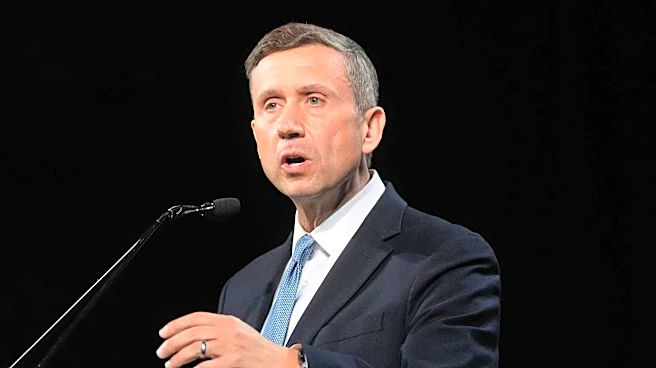
Eliot Engel, a former U.S. Representative from New York and a prominent figure in foreign affairs, has died at the age of 79 due to complications from Parkinson's disease. Engel served in Congress for over three decades, beginning his tenure in 1988 after
defeating a long-term incumbent. He was known for his strong support of Israel and his advocacy for military intervention in Kosovo during the 1990s. Engel chaired the House Foreign Affairs Committee and played a significant role in President Trump's first impeachment inquiry. His career was marked by efforts to address international issues, including the Harkin–Engel Protocol aimed at eliminating child labor in West African cocoa farms.
Why It's Important?
Eliot Engel's contributions to U.S. foreign policy have had lasting impacts, particularly in areas such as the Balkans and child labor reform. His leadership in the Foreign Affairs Committee helped shape U.S. responses to international conflicts and humanitarian issues. Engel's involvement in President Trump's impeachment inquiry highlights his commitment to accountability and transparency in government. His passing marks the end of an era for a politician who was deeply involved in shaping U.S. foreign relations and advocating for global peace and security.
What's Next?
With Engel's passing, there may be reflections on his contributions to foreign policy and discussions on how his legacy will influence future U.S. diplomatic efforts. Current and former colleagues may continue to honor his work by advancing the causes he championed, such as international peace and labor rights. The Foreign Affairs Committee may also see shifts in leadership and priorities as it continues to address global challenges.
Beyond the Headlines
Engel's career offers insights into the complexities of U.S. foreign policy and the role of individual lawmakers in shaping international relations. His advocacy for Kosovo and the Albanian community underscores the importance of congressional support in international conflicts. Engel's work on the Harkin–Engel Protocol highlights the intersection of foreign policy and human rights, demonstrating the potential for legislative action to address global issues.