




What's Happening?
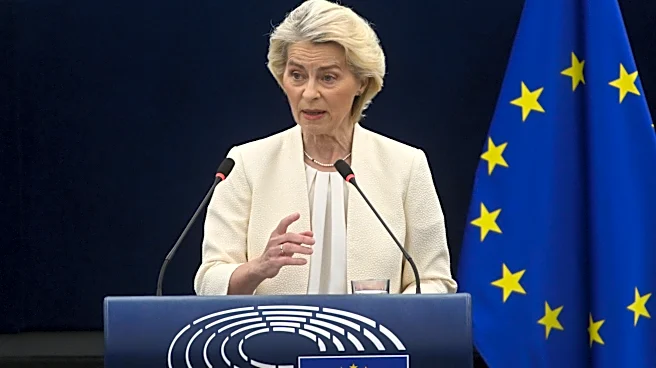
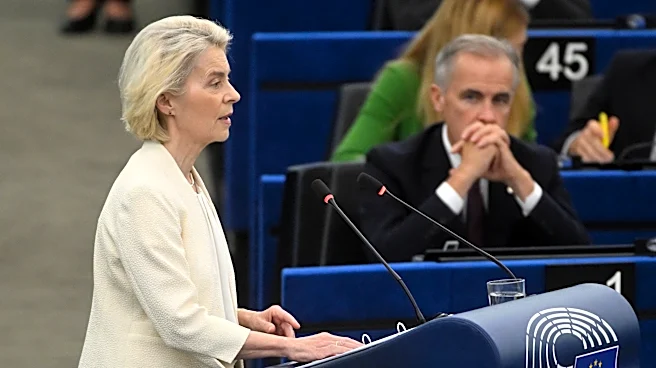
European Commission President Ursula von der Leyen has proposed a ban on social media for children under the age of 13, alongside restricted access for those between 13 and 15. This proposal was made during her 'State of the Union' speech on September
17, where she highlighted the dangers that online services pose to minors. The initiative also includes a series of new obligations for social media platforms, video sharing services, online video games, and AI chatbots that offer services to individuals under 18. This move is expected to impact major tech companies such as Google's YouTube and Meta Platforms' Facebook and Instagram. The proposal reflects a growing global concern regarding the impact of online services on the safety and well-being of children.
Why It's Important?
This proposal by the European Commission President signifies a significant step in regulating online content and access for minors, potentially setting a precedent for other regions, including the U.S. If enacted, it would compel major U.S.-based tech companies like Meta and Google to re-evaluate and potentially redesign their platforms to comply with stricter age verification and content access rules in Europe. This could lead to a global shift in how these companies operate, as implementing different standards for different regions can be complex and costly. For U.S. policymakers, this European initiative could serve as a model or a catalyst for similar discussions and regulations concerning child safety online, especially given the increasing concerns about the mental health and developmental impacts of social media on young people. The economic implications for tech companies could be substantial, requiring significant investment in new technologies for age verification and content moderation, potentially affecting their revenue models.
What's Next?
The proposal will likely undergo a legislative process within the European Union, involving discussions and potential amendments by the European Parliament and member states. Tech companies, including those based in the U.S., will be closely monitoring these developments and may engage in lobbying efforts to influence the final regulations. Should the ban and restrictions be adopted, these companies will need to develop and implement robust age verification systems and content filtering mechanisms. This could involve exploring new technologies or enhancing existing ones to accurately determine user age and restrict access accordingly. The outcome in Europe could also spur renewed calls for similar legislation in the U.S., potentially leading to debates in Congress and actions by regulatory bodies regarding child online safety and data privacy.
Beyond the Headlines
The proposed social media ban and restrictions for minors delve into complex ethical and societal questions about digital citizenship, parental control, and the responsibilities of tech companies. It highlights a growing tension between the open nature of the internet and the need to protect vulnerable populations. This move could spark a broader global conversation about the appropriate age for digital autonomy and the role of governments in safeguarding children in the digital realm. Furthermore, it raises questions about the effectiveness of age verification technologies and the potential for unintended consequences, such as driving younger users to less regulated platforms or creating a black market for age-verified accounts. The long-term cultural impact could be a re-evaluation of childhood and adolescence in an increasingly digital world, potentially leading to new norms around screen time and online engagement for younger generations.