


What's Happening?
U.S. Senator Tina Smith (D-MN) has introduced bipartisan legislation, the Memorializing Peace Corps Service Act, aimed at permitting the use of the official Peace Corps seal, emblem, and logo on gravestones, plaques, and death announcements for deceased
Peace Corps volunteers, officers, and staff. The current law prohibits such use, preventing families from honoring their loved ones' service in this manner. The bill was inspired by Susan, a Minnesotan who was unable to engrave the Peace Corps symbol on her brother Thomas (Tom) W. Stieve's gravestone. Tom served as a Peace Corps volunteer in Kiribati and later as a Peace Corps-sponsored United Nations volunteer in Vanuatu in the 1980s. Despite his significant service, current regulations prevented his sister from including the Peace Corps logo on his memorial. Senator Smith emphasized that volunteering with the Peace Corps is a profound dedication to service that should be recognized posthumously.
Why It's Important?
This legislation addresses a significant oversight in current law that prevents families from fully honoring the service of deceased Peace Corps members. For many volunteers, their time with the Peace Corps represents a defining period of their lives, marked by dedication to global service and humanitarian efforts. The inability to include the official emblem on gravestones can be a source of distress for grieving families who wish to commemorate this important aspect of their loved one's legacy. Passing this bill would provide a meaningful way for families to acknowledge the sacrifices and contributions of Peace Corps members, aligning their recognition with that of other forms of national service. It also serves to inspire future generations by publicly honoring those who have dedicated themselves to international development and peace, reinforcing the value of such service within American society.
What's Next?
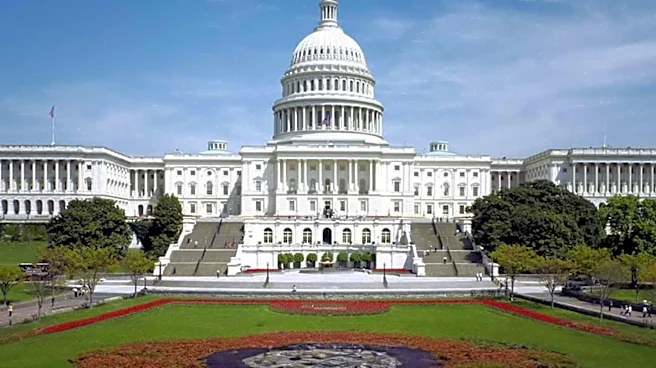
The Memorializing Peace Corps Service Act, co-sponsored by Senator Mike Rounds (R-SD) and endorsed by the National Peace Corps Association, will now proceed through the legislative process in the U.S. Senate. It will likely be referred to a relevant committee for review and potential amendments before being brought to a vote. Given its bipartisan support and the nature of the bill, which seeks to honor public service, it has a reasonable chance of passage. If approved by the Senate, it would then move to the House of Representatives for consideration. Should it pass both chambers, it would be sent to the President for signature into law. The National Peace Corps Association has expressed strong support for the bill, hoping for its swift passage to allow families to honor their loved ones' service.
Beyond the Headlines
Beyond the immediate impact of allowing a symbol on a gravestone, this legislation touches upon broader themes of national recognition and the collective memory of public service. The Peace Corps, established by President John F. Kennedy, has a rich history of promoting peace and friendship globally through the efforts of American volunteers. The current prohibition on using its emblem on memorials inadvertently diminishes the public acknowledgment of these contributions. Changing this law would not only provide solace to individual families but also elevate the status of Peace Corps service within the national narrative of public duty. It highlights how seemingly small legislative changes can have profound emotional and symbolic significance, reinforcing the idea that all forms of dedicated service to the nation, whether military or civilian, deserve appropriate and lasting recognition.