





What's Happening?
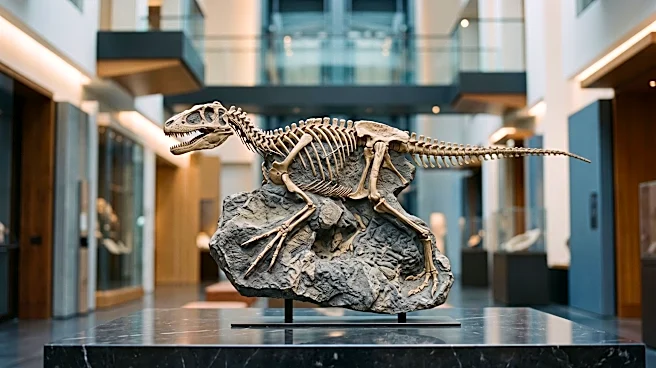
A rare Nanotyrannus skeleton, nicknamed 'Jodi,' was sold for $47.3 million at a Sotheby's auction in New York City. The auction house had initially estimated its value between $6 million and $9 million. This sale makes 'Jodi' the second-priciest dinosaur
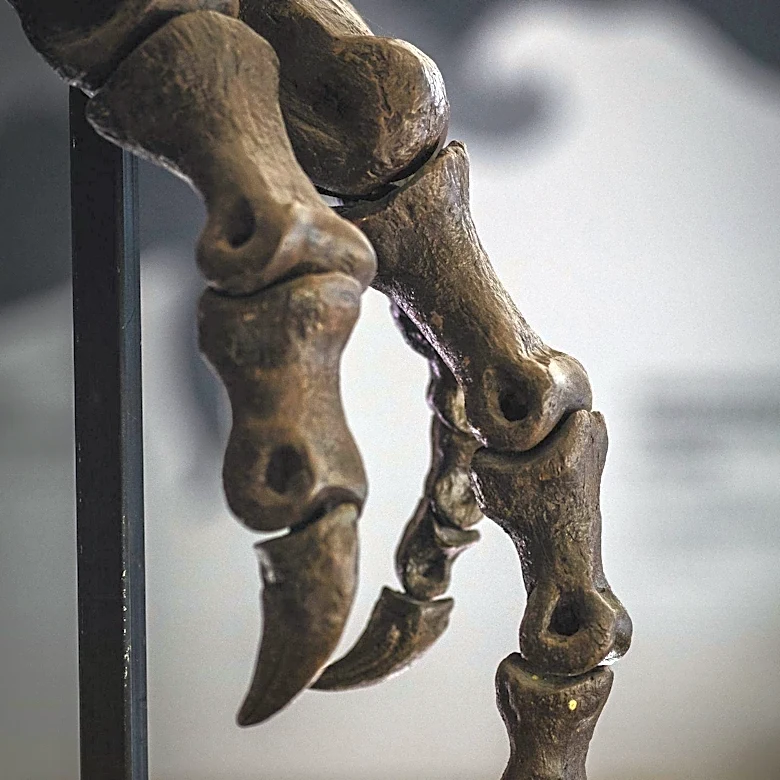
fossil ever sold, following a T. rex fossil named 'Gus' which fetched $50.1 million earlier this summer at Sotheby's. The buyer of 'Jodi' has chosen to remain anonymous. The Nanotyrannus, a distant relative of the Tyrannosaurus rex, coexisted with its larger cousin approximately 67 million years ago during the Cretaceous period. It is characterized by its relatively longer forelimbs, larger hand claws, and more slender, blade-like teeth. 'Jodi' is one of only three known Nanotyrannus skeletons, standing 9 feet 6 inches tall and stretching nearly 20 feet long, and is considered almost 70% complete. The fossil was discovered in 2019 by Montana rancher Jodi Pierson, after whom it is named. Professional fossil hunters involved in its discovery and excavation were featured in the 2020 Discovery Channel documentary series 'Dino Hunters.'
Why It's Important?
The sale of 'Jodi' for $47.3 million highlights a growing trend of significant paleontological specimens entering private collections, which has sparked debate within the scientific community. While Sotheby's head of science and natural history, Cassandra Hatton, praised the commitment to understanding and preserving the specimen, many scientists oppose such private sales. Their concern is that these important fossils, which could offer invaluable insights into prehistoric life, should be housed in museums or other public institutions. This would allow researchers broader access for study and ensure public viewing, contributing to scientific advancement and education. The high price tag also underscores the increasing commercial value of rare dinosaur fossils, potentially incentivizing private exploration and sales over contributions to public scientific collections. The debate centers on whether these specimens are best served as private assets or as public resources for scientific research and education.
What's Next?
The anonymous buyer of 'Jodi' will now determine the future of this significant Nanotyrannus fossil. The scientific community will likely continue to advocate for greater access to such specimens for research and public display, regardless of private ownership. This sale may further fuel discussions about the ethics and implications of private fossil auctions versus public institutional acquisition. It could also influence future discoveries and how they are handled, potentially encouraging more private individuals or entities to seek out and commercialize paleontological finds. The ongoing debate about the classification of Nanotyrannus, which was only recently confirmed as a distinct genus rather than a juvenile T. rex, emphasizes the importance of continued scientific study, which could be hampered by restricted access to key specimens.
Beyond the Headlines
The sale of 'Jodi' touches upon deeper ethical and cultural dimensions concerning the ownership and accessibility of natural heritage. The substantial sum paid for the fossil reflects not only its scientific rarity but also its perceived cultural and investment value. This commercialization of scientific artifacts raises questions about the balance between private property rights and the collective scientific and educational benefit. The controversy surrounding private sales versus public display highlights a fundamental tension: should such unique specimens be treated as commodities or as part of humanity's shared scientific legacy? The outcome of this debate could influence future policies regarding the excavation, ownership, and exhibition of significant paleontological discoveries, potentially shaping how future generations interact with and learn from Earth's ancient past.