








What's Happening?
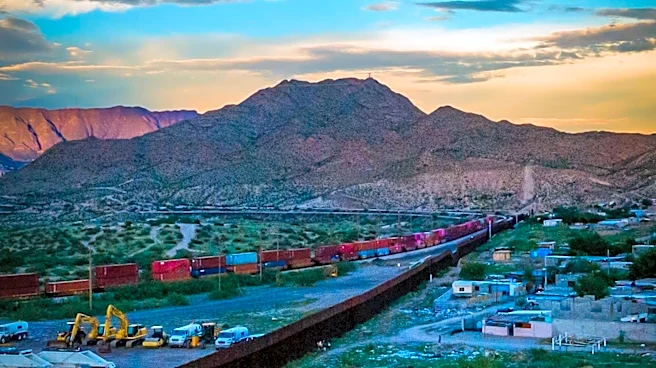
The Trump administration is rapidly advancing the construction of a 'smart wall' along the US-Mexico border, funded by a $46 billion allocation from Congress. This initiative combines 30-foot-tall steel fencing with advanced surveillance technologies
such as sensors, cameras, and towers. The project aims to enhance border security by allowing Border Patrol to monitor the area more effectively. Despite the significant investment, the project faces criticism for its potential impact on local communities and privacy concerns. Critics argue that the deployment of sophisticated surveillance technology militarizes the border and infringes on the rights of residents. The administration, however, defends the project as a necessary measure to maximize the efficiency of border agents and deter illegal crossings.
Why It's Important?
The development of the 'smart wall' is significant as it represents a major shift in US border security strategy, emphasizing technology and surveillance. This approach could set a precedent for future border security measures, potentially influencing immigration policy and enforcement. The project has sparked debate over the balance between national security and civil liberties, with concerns about privacy and the militarization of border communities. The financial implications are also considerable, with questions raised about the cost-effectiveness and oversight of such a large-scale investment. The outcome of this initiative could impact US-Mexico relations and shape the national discourse on immigration and border security.
What's Next?
The Trump administration plans to continue the construction and technological enhancement of the border wall, with hundreds of miles already contracted. The Department of Homeland Security aims to complete a significant portion of the wall by next year. As the project progresses, it is likely to face ongoing scrutiny from civil rights groups, local communities, and fiscal watchdogs. The administration may need to address these concerns to maintain public support and ensure the project's success. Additionally, the deployment of autonomous surveillance technologies will require careful management to prevent potential biases and ensure compliance with privacy standards.
Beyond the Headlines
The 'smart wall' initiative raises broader questions about the role of technology in law enforcement and its implications for civil liberties. The use of artificial intelligence and surveillance technologies at the border could lead to increased reliance on automated systems in other areas of public policy. This shift may prompt discussions about the ethical use of technology in government operations and the need for robust oversight mechanisms. The project also highlights the challenges of balancing security needs with the rights and concerns of local communities, a dynamic that could influence future policy decisions in various sectors.