


What's Happening?
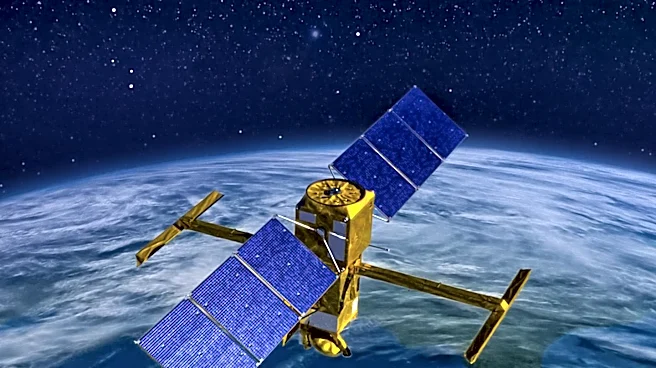
NASA's Nancy Grace Roman Space Telescope is projected to have its operational lifetime more than doubled, from an initial 10 years to at least 22 years, due to significant fuel savings. This extended lifespan is attributed to several factors: the exceptional
accuracy of its first mid-course correction maneuver, which used less than 10% of the budgeted fuel; additional fuel loaded prior to launch because the spacecraft was lighter than initially projected; and anticipated further savings from its upcoming second mid-course correction and orbital insertion. The first burn, executed on August 31, was over 99% accurate and consumed only about 40 pounds (18 kilograms) of fuel, far less than the 441 pounds (200 kilograms) allocated. The spacecraft's actual launch weight of 17,760 pounds (8,056 kilograms) was significantly below the conservative maximum weight of 21,605 pounds (9,800 kilograms) used for fuel budgeting, allowing for propellant tanks to be filled beyond the 10-year requirement. These efficiencies mean the Roman Space Telescope will have substantially more resources for future scientific observations.
Why It's Important?
The extended operational lifetime of the Nancy Grace Roman Space Telescope holds immense importance for astrophysics and the broader scientific community. Doubling its mission duration means a significantly longer period for collecting data on exoplanets, dark energy, and other cosmic phenomena, potentially leading to groundbreaking discoveries that could reshape our understanding of the universe. For U.S. scientific leadership, this extended mission reinforces NASA's capabilities in long-duration space observation and mission planning. The additional years of operation will allow for more comprehensive surveys, follow-up observations, and the ability to adapt to new scientific questions that may arise. This longevity also represents a substantial return on investment for taxpayers, as the mission will yield more scientific output without the need for a new, costly launch. Researchers will have more time to utilize the telescope's advanced instruments, enhancing the U.S.'s position in space science and astronomical research.
What's Next?
The Roman Space Telescope team is preparing for its second mid-course correction burn, now planned for later this month. This maneuver is expected to be very small due to the success of the first correction, further conserving fuel. Following this, the observatory will achieve its targeted position before maneuvering into its final orbit at L2, approximately 100 days after launch, around early December. Once in orbit around L2, the telescope will require periodic station-keeping burns approximately every 28 days. These upcoming steps are crucial for the mission to fully establish its operational phase and begin its primary scientific observations. The continued success of these maneuvers will solidify the projected 22-year operational window, allowing scientists to plan long-term research programs and maximize the scientific output of the mission. Further updates on fuel consumption and mission planning will likely be provided as these milestones are achieved.
Beyond the Headlines
The remarkable fuel efficiency and extended lifespan of the Roman Space Telescope highlight a broader trend in space mission planning and execution: the increasing emphasis on precision engineering, optimized trajectory planning, and conservative resource management. This success could influence future NASA missions, encouraging even more rigorous approaches to fuel budgeting and operational efficiency, potentially leading to longer-duration missions across various scientific disciplines. Ethically, maximizing the operational life of such a significant scientific asset ensures that the investment of public funds yields the greatest possible scientific return. It also underscores the dedication of engineering and operations teams to push the boundaries of mission longevity. This achievement could also inspire advancements in propulsion systems and orbital mechanics, as engineers seek to replicate and improve upon these fuel-saving strategies for future deep-space endeavors, ultimately expanding humanity's reach and understanding of the cosmos.