
What's Happening?
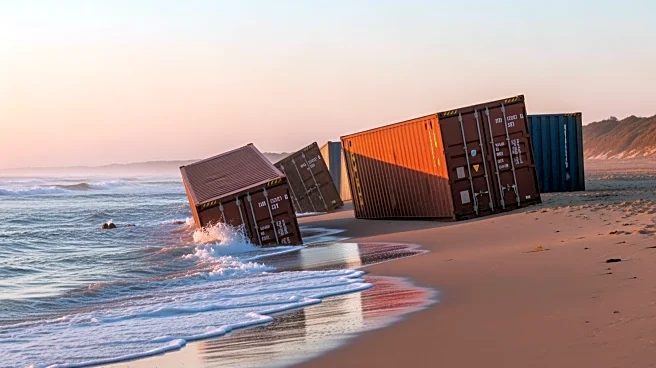
In a maritime incident, eight containers carrying bananas were washed overboard from the reefer ship Baltic Klipper in Southampton Water, leading to thousands of bananas washing up on the beaches of West
Sussex, England. A total of 16 containers were lost, with others containing plantains and avocados. The containers were driven ashore by heavy seas and high winds, with 11 of the 16 containers beached as of Tuesday. The British government is urging the shipping company and its insurers to cover the cleanup costs. Meanwhile, volunteers are assisting in the cleanup efforts, with some taking bananas home. Authorities have warned the public against consuming or taking the bananas, citing legal repercussions.
Why It's Important?
This incident highlights the challenges and responsibilities associated with maritime shipping and the environmental impact of lost cargo. The cleanup efforts underscore the importance of accountability in the shipping industry, as well as the role of insurance in mitigating environmental damage. The situation also raises questions about the legal and ethical considerations of salvaging goods washed ashore. The involvement of volunteers in the cleanup reflects community engagement in addressing environmental issues, while the government's call for accountability emphasizes the need for regulatory oversight in maritime operations.
What's Next?
The shipping company, Seatrade, has stated that its insurers are fully engaged in the cleanup process. The ongoing search for the remaining containers involves the use of helicopters and aircraft. The incident may prompt discussions on improving safety measures and protocols to prevent similar occurrences in the future. Additionally, the legal implications for individuals taking the washed-up bananas could lead to further public discourse on salvage rights and responsibilities.