




What's Happening?
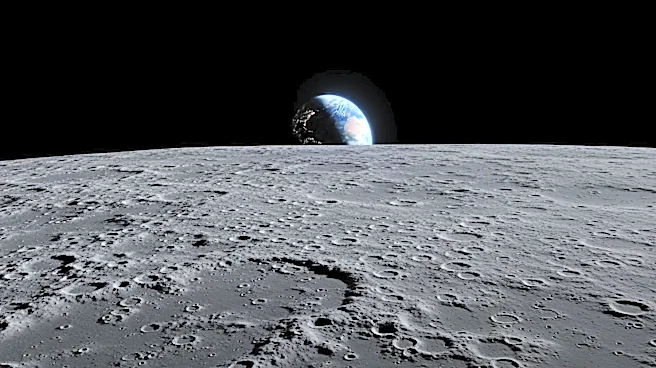
NASA's Artemis 2 mission is set to perform a flyby around the moon's far side on April 6, aiming to recreate the iconic 'Earthrise' photograph taken by the Apollo 8 mission in 1968. The original Earthrise image depicted Earth's blue marble rising above
the lunar surface, symbolizing the planet's fragility and unity. The Artemis 2 crew, consisting of NASA astronauts Reid Wiseman, Victor Glover, Christina Koch, and Jeremy Hansen from the Canadian Space Agency, will attempt to capture both 'Earthrise' and 'Earthset' images during their lunar loop. Unlike Apollo 8, which orbited the moon 10 times, Artemis 2 will swing around the far side just once, at a higher altitude, using advanced digital cameras.
Why It's Important?
The attempt to recreate the Earthrise image is significant as it serves as a reminder of Earth's vulnerability and the shared responsibility to protect it. The original photograph became a symbol for environmental and anti-war movements during the Vietnam War era. In today's context, with ongoing global conflicts and environmental challenges, a new Earthrise image could inspire unity and awareness about the planet's fragility. The mission also highlights advancements in space exploration technology, showcasing NASA's continued efforts to explore beyond Earth and the collaborative nature of international space missions.
What's Next?
Following the flyby, the Artemis 2 crew will continue their mission, which is part of NASA's broader Artemis program aimed at returning humans to the moon and eventually reaching Mars. The success of capturing the Earthrise and Earthset images could influence future missions and public perception of space exploration. Stakeholders, including environmental groups and international space agencies, may use these images to promote global cooperation and environmental stewardship.
Beyond the Headlines
The Artemis 2 mission underscores the evolving role of space exploration in addressing global issues. The symbolic nature of the Earthrise image can foster discussions on international collaboration in space and the importance of preserving Earth's environment. As space missions become more frequent, they offer opportunities to reflect on humanity's place in the universe and the interconnectedness of all life on Earth.