




What's Happening?
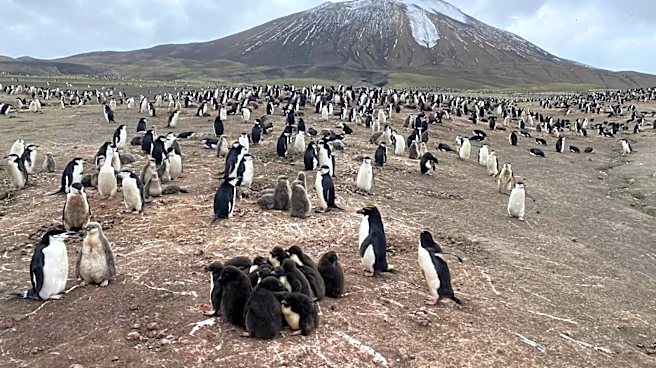
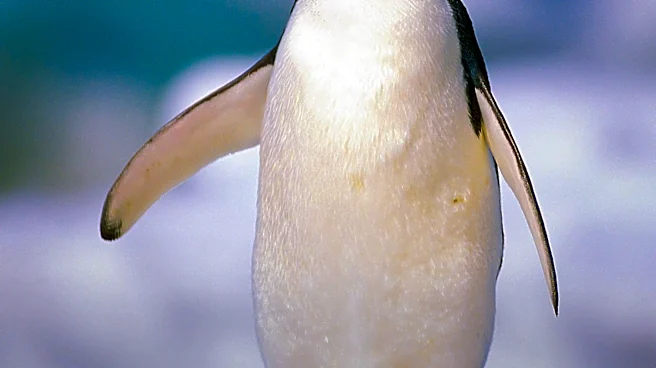
A new study conducted by the Institute of Marine Sciences of Andalusia (ICMAN-CSIC) in collaboration with the University of Granada has revealed that large colonies of chinstrap penguins in Antarctica are a significant natural source of methane. Methane
is a potent greenhouse gas with a greater impact on global warming than carbon dioxide. The research, published in the journal 'Climate and Atmospheric Science', estimates that the guano produced by these birds generates approximately 490,000 tonnes of methane annually. This figure is comparable to emissions from other recognized natural sources, such as all the world's coastal ocean areas. The study involved direct gas measurements in two large penguin colonies on Deception Island and utilized drones with optical sensors to map guano-covered surfaces and estimate population sizes. If extended to all Antarctic land areas influenced by these birds, emissions could reach up to 7 million tonnes of methane per year, a magnitude similar to global estimates for other major animal-related methane sources like termites.
Why It's Important?
This discovery is important because it highlights a previously unquantified natural source of methane, a greenhouse gas that significantly contributes to climate change. While most studies on methane emissions have focused on human activities such as fossil fuels, agriculture, and waste management, this research demonstrates that large concentrations of wildlife can also generate substantial emissions through the accumulation and decomposition of organic matter. Understanding all sources of greenhouse gases is crucial for accurately modeling climate change and developing comprehensive mitigation strategies. The inclusion of these natural emissions in global inventories will provide a more complete picture of the Earth's methane budget, which is essential for international climate efforts and policy-making. This finding could influence how scientists and policymakers assess the overall impact of natural ecosystems on global warming and potentially lead to a re-evaluation of certain climate models.
What's Next?
The authors of the study believe that this phenomenon should be included in global emissions inventories. This suggests a call for international scientific bodies and climate organizations to integrate these natural methane sources into their assessments and models. Further research will likely focus on understanding how climate change itself could alter these emissions. This includes investigating the potential impacts of changing environmental conditions on penguin populations and the soil microorganisms responsible for methane production as guano breaks down. Such studies would be critical for predicting future methane emission trends from these natural sources and their overall contribution to global warming. The findings may also prompt a broader examination of other large wildlife colonies as potential methane sources.
Beyond the Headlines
The study's findings underscore the complex interplay between natural biological processes and global climate systems. While human activities are undeniably the primary driver of current climate change, understanding natural contributions, even those from seemingly innocuous sources like penguin guano, is vital for a holistic view of the Earth's climate. This research also highlights the continuous evolution of scientific understanding regarding greenhouse gas sources and sinks. It challenges the often-simplified narrative of climate change by revealing the intricate web of factors at play. Ethically, it prompts a reflection on how we categorize and address emissions, distinguishing between anthropogenic and natural sources, and how this distinction influences responsibility and mitigation strategies. Culturally, it adds another layer to our appreciation of the Antarctic ecosystem, revealing its unexpected role in global biogeochemical cycles.