



What's Happening?
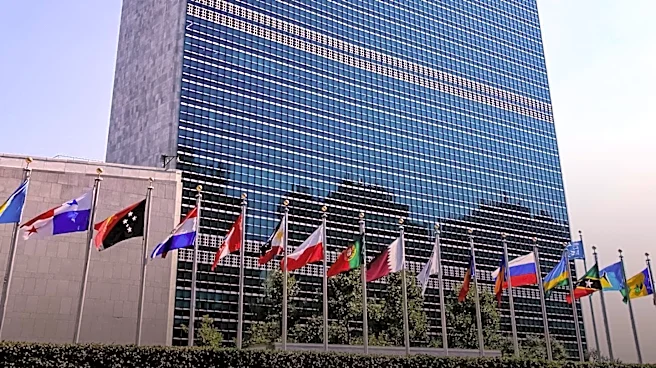
A new book, 'The UN’s Multidimensional Approach to the Israel-Arab Conflict, 1967–1982: An Architecture for Peace,' by Diego Salama, Research Associate at Leiden University’s Institute of Security and Global Affairs, analyzes the historical role of the United
Nations in managing the Arab-Israeli conflict. Drawing on previously classified archival material, Salama examines how four UN operations—UNTSO, UNEF II, UNDOF, and UNIFIL—developed into an interconnected regional peacekeeping system. The book highlights their operational achievements, institutional limitations, and capacity for innovation, treating them not as isolated deployments but as components of a deliberately managed regional system. Salama argues that the UN's institutional memory, established relationships, and operational experience remain essential assets for addressing the region's future, even as its structures require reform and renewed strategic direction. The analysis comes at a time of intense regional instability, including ongoing concerns regarding hostilities and the potential for escalation.
Why It's Important?
This historical analysis is crucial for understanding the potential future role of international institutions in bringing stability and peace to the Middle East, particularly in the aftermath of recent escalations. The book's insights into the UN's past successes, such as its mediation efforts at Kilometer 101 after the 1973 Yom Kippur War, demonstrate the organization's capacity to de-escalate conflicts and create space for diplomatic solutions when given the necessary backing. By highlighting the interconnectedness and mutual dependence of UN peacekeeping missions, Salama's work underscores the value of a holistic, coordinated approach to conflict management. This is particularly relevant for U.S. foreign policy, as the U.S. often plays a leading role in international peace efforts and relies on the effectiveness of multilateral institutions. Understanding the UN's historical architecture can inform strategies for future interventions, ensuring that new initiatives leverage existing institutional strengths rather than duplicating efforts.
What's Next?
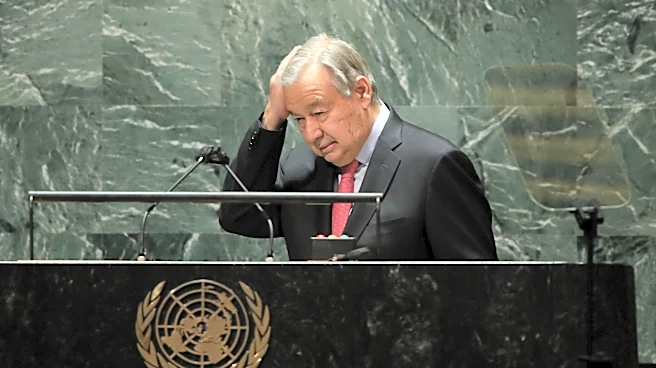
The insights from Salama's book suggest that future efforts to stabilize the Middle East should consider leveraging and reforming existing UN peacekeeping frameworks rather than creating entirely new, ad hoc solutions. With the current crisis of confidence in multilateralism, there is a need for the UN to strategically define its role, identifying where it should lead, partner, or follow. The potential withdrawal of UNIFIL from southern Lebanon, for instance, raises questions about who will fill the void and whether a European mission or other architectures will emerge. The book advocates for a Secretary-General who is self-aware, strategic, and willing to make difficult decisions, including appointing highly capable individuals to lead regional efforts. A renewed focus on field-driven innovation, supported by the UN's institutional memory and established relationships, could be key to addressing the complex challenges in the region and rebuilding trust in multilateralism.
Beyond the Headlines
The book's exploration of the UN's peacekeeping architecture reveals a deeper truth about international conflict resolution: the importance of sustained, coordinated institutional presence. The accidental evolution of these operations, driven by necessity and field-level innovation, highlights the adaptive capacity of the UN when political will and resources are aligned. The contrast between the UN's quiet diplomatic successes and the public perception of its failures underscores the challenge of communicating the value of multilateralism. In an era of increasing geopolitical fragmentation and skepticism towards international bodies, Salama's work serves as a reminder that effective peacekeeping is not about solving conflicts outright, but about managing them, creating conditions for dialogue, and preventing wider escalation. This nuanced understanding is vital for policymakers and the public alike to appreciate the complex, often unheralded, work of international organizations.