




What's Happening?
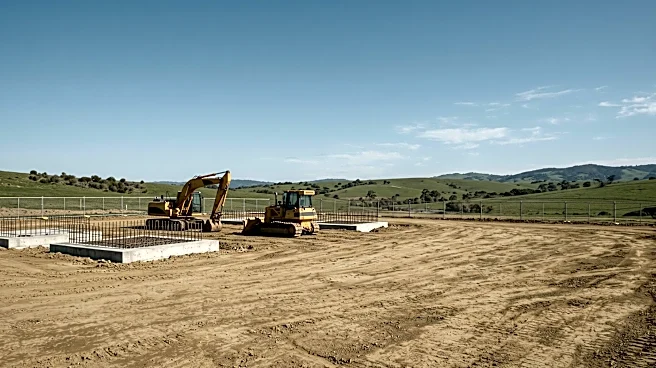
A federal judge has issued a preliminary injunction, temporarily blocking construction at a proposed U.S. Immigration and Customs Enforcement (ICE) facility in South County, California. The ruling, delivered by Northern District of California Judge Eumi
Lee, states that plaintiffs are likely to succeed in their claim that the federal government failed to conduct legally mandated environmental reviews before advancing the project. Judge Lee also found that allowing construction to proceed poses immediate risks to the surrounding environment. The injunction requires ICE and ECG6, the property holding company, to pause all construction, demolition, and development activities at the site located at 7240 Holsclaw Road. Santa Clara County Counsel Tony LoPresti indicated that plaintiffs will continue to seek a permanent block on the project, which includes office space and detention areas for over 100 people. The decision has been celebrated by immigrant rights advocates who have opposed the facility.
Why It's Important?
This ruling is a significant victory for environmental advocates and immigrant rights groups, marking a temporary halt to a project that has generated considerable local opposition. The judge's emphasis on the federal government's failure to conduct environmental reviews highlights the importance of regulatory compliance, even for federal projects, and sets a precedent for environmental protection. The proposed facility, with its capacity to detain over 100 individuals, has fueled fears among immigrant communities and advocates about expanded immigration enforcement operations in the Bay Area. The injunction provides a crucial pause, allowing for further legal challenges and potentially forcing a more thorough assessment of the project's environmental and social impacts. It underscores the power of local and state entities, alongside advocacy groups, to challenge federal actions through the judicial system, particularly when procedural requirements are not met.
What's Next?
The preliminary injunction is expected to remain in effect throughout the lawsuit's trial proceedings, a process that legal experts suggest could take years. Judge Lee's decision allows for limited activities at the site, such as maintenance and security work, and permits the federal government to proceed with conducting an environmental review. Both parties are ordered to meet by September 30 to finalize the details of the preliminary injunction order. Santa Clara County officials have indicated they will not consent to any agreement that permits further construction of the proposed facility. The federal government and ECG6 have not yet responded to requests for comment. This legal battle will continue to unfold, with potential implications for future federal projects and the balance of power between federal agencies and local jurisdictions regarding environmental and community concerns.
Beyond the Headlines
The legal battle over the South County ICE facility transcends a simple land-use dispute, touching upon profound ethical and political dimensions. The judge's ruling, by prioritizing environmental review, implicitly challenges the notion that federal projects can bypass local and state environmental protections, potentially setting a precedent for future federal developments across the U.S. Furthermore, the controversy surrounding the facility reflects the ongoing national debate about immigration policy, enforcement, and the treatment of undocumented individuals. The proposed detention space, capable of holding over 100 people, symbolizes the broader expansion of immigration detention infrastructure under the Trump administration, raising questions about human rights, due process, and the role of local communities in resisting federal mandates they deem unjust. This case highlights the power of judicial oversight in mediating complex conflicts between federal authority, environmental stewardship, and community values.