




What's Happening?
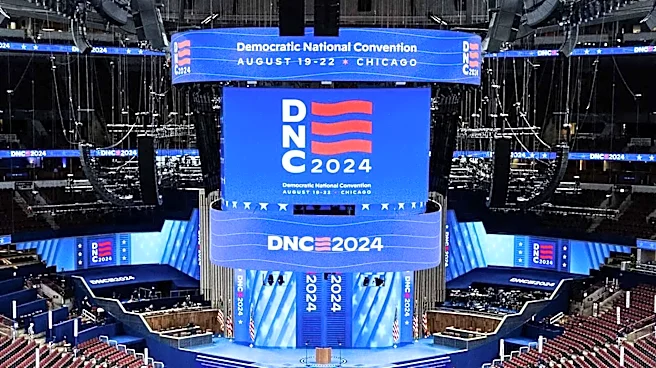
Atlanta Mayor Andre Dickens has issued a strong rebuke to the Democratic National Committee (DNC) after Atlanta was excluded from the shortlist of cities to host the 2028 Democratic National Convention. In a statement posted on his Instagram account and
a letter obtained by news outlets, Mayor Dickens argued that this decision signifies the DNC's neglect of the South and Black voters, who are a crucial part of the Democratic base. He highlighted Atlanta's capabilities as a host city, citing its recent selection as a FIFA World Cup host and State Farm Arena's status as a premier venue, suggesting that logistical concerns were not the reason for the exclusion. The DNC has narrowed its list of potential host cities to Boston, Denver, and Philadelphia, removing Atlanta and Chicago from consideration. Mayor Dickens emphasized that this decision is a 'political mistake' that fails to acknowledge the strategic importance of the American South in national politics, especially given that Georgia remains a critical battleground state.
Why It's Important?
This decision by the DNC and Mayor Dickens' strong reaction underscore a significant internal debate within the Democratic Party regarding its strategy for the 2028 election cycle. The exclusion of Atlanta, a city with a rich history in the civil rights movement and a substantial Black population, raises concerns about the party's commitment to its core voting demographics in the South. Mayor Dickens' assertion that the DNC is 'abandoning Black voters' could lead to disillusionment among these crucial constituents, potentially impacting voter turnout and support in future elections. Furthermore, the criticism highlights a perceived disconnect between national party leadership and grassroots organizers and Black political leaders in the South. This tension could complicate efforts to galvanize support in a region that is increasingly vital for Democratic success, especially as Republicans actively engage with Southern strongholds. The choice of 'safe spaces' over battleground states, as Dickens put it, could be seen as a missed opportunity to invest in and energize a key region for winning the White House.
What's Next?
The DNC is expected to make a final selection for the 2028 convention host city from the remaining three finalists (Boston, Denver, and Philadelphia) in the coming months. Mayor Dickens' criticism is likely to fuel ongoing discussions within the Democratic Party about its outreach strategies and priorities, particularly concerning the South and Black voters. This public disagreement could prompt the DNC to re-evaluate its engagement with Southern states and communities, potentially leading to increased investment in local campaigns and initiatives in the region. Grassroots organizers and Black political leaders in the South may intensify their efforts to advocate for greater recognition and resources from the national party. The controversy could also influence how the Democratic Party approaches its primary calendar and convention site selections in future cycles, potentially leading to a more inclusive process that better reflects the diversity and strategic importance of its various constituencies.
Beyond the Headlines
The DNC's decision to exclude Atlanta from the 2028 convention shortlist, and Mayor Dickens' subsequent criticism, touches upon deeper implications regarding the Democratic Party's long-term strategy and its relationship with its base. This event highlights the ongoing challenge for the party to balance its traditional strongholds with the need to expand its influence in emerging battleground regions, particularly the South. The perception of 'abandoning' Black voters could have lasting cultural and political ramifications, potentially eroding trust and loyalty among a demographic that has historically been a cornerstone of the Democratic coalition. It also raises questions about the party's willingness to confront political battles in challenging territories versus retreating to more comfortable, established areas. This situation could trigger a broader re-evaluation of how the Democratic Party defines its identity and pursues its electoral goals, especially in an evolving political landscape where every state and demographic group holds increasing significance.