








What's Happening?
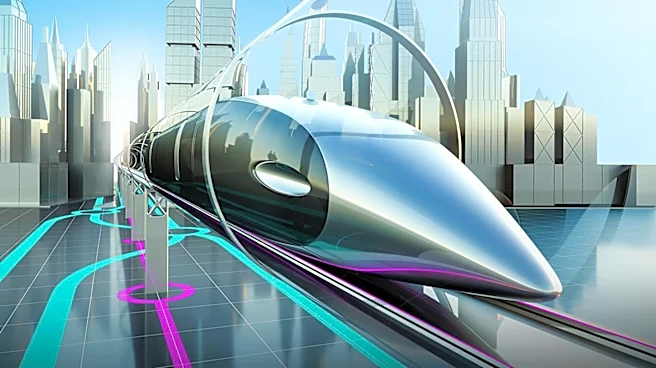
The Hyperloop, a futuristic transportation concept proposed by Elon Musk that promised rapid passenger transport through vacuum tubes, has largely ceased development. Virgin Hyperloop One, a key company in its development, ended its efforts by 2023. This
cessation highlights significant challenges related to cost and practicality that ultimately outweighed the initial excitement surrounding the technology. The Hyperloop aimed to connect cities at speeds exceeding air travel, generating considerable interest in emerging tech and transportation sectors throughout the 2010s. Its discontinuation serves as a case study for the difficulties in bringing ambitious new mobility solutions to fruition, particularly when faced with substantial financial and logistical hurdles. The U.S. Department of Transportation is now exploring other new mobility concepts, such as the Advanced Air Mobility and Electric Vertical Takeoff and Landing (eVTOL) Integration Pilot Program, though these also face skepticism from transportation experts regarding their scalability and infrastructure requirements.
Why It's Important?
The failure of Hyperloop technology to advance beyond the development stage has significant implications for the future of U.S. transportation and innovation. It underscores the immense capital investment and complex regulatory landscape required for large-scale infrastructure projects, even those with high-profile backing. For industries focused on advanced mobility, this outcome suggests a need for more rigorous evaluation of economic viability and practical implementation before significant resources are allocated. The skepticism surrounding eVTOL technology, as noted by transportation experts, further indicates a cautious outlook on disruptive transportation solutions. This situation could lead to a more conservative approach to funding and developing new transit projects, potentially slowing down the pace of innovation in the sector. It also highlights the challenge of translating visionary concepts into tangible, cost-effective, and widely adoptable solutions for urban and inter-city mobility.
What's Next?
Following the Hyperloop's cessation, the focus for new mobility in the U.S. appears to be shifting towards other technologies, such as the Advanced Air Mobility and Electric Vertical Takeoff and Landing (eVTOL) Integration Pilot Program. This program, initiated by the U.S. Department of Transportation, involves eight projects across the country exploring new applications for eVTOL technology. However, these initiatives are already facing scrutiny from transportation experts who question their potential to address urban mobility on a meaningful scale, citing concerns about ground-based infrastructure, right-of-way issues, and regulatory complexities. Cities are being advised to critically evaluate new mobility ideas using frameworks that assess problems solved, potential uses, and proportionality of risks to benefits. This suggests a more cautious and analytical approach to future transportation innovations, with an emphasis on practical considerations over ambitious, unproven concepts.
Beyond the Headlines
The trajectory of the Hyperloop project offers a broader lesson on the lifecycle of disruptive technologies and the interplay between innovation, investment, and societal adoption. Its failure to materialize into a viable transportation system highlights the ethical and economic responsibilities of promoting technologies that may not be feasible. The significant public and private investment poured into Hyperloop, despite its eventual collapse, raises questions about due diligence and the potential for 'hype cycles' to misdirect resources. This outcome could foster a more critical public discourse around technological promises, encouraging a greater demand for transparency and realistic assessments from innovators and policymakers alike. It also underscores the enduring challenge of balancing ambitious technological visions with the practical realities of engineering, economics, and environmental impact, potentially influencing how future large-scale infrastructure projects are conceived, funded, and regulated in the U.S.