


What's Happening?
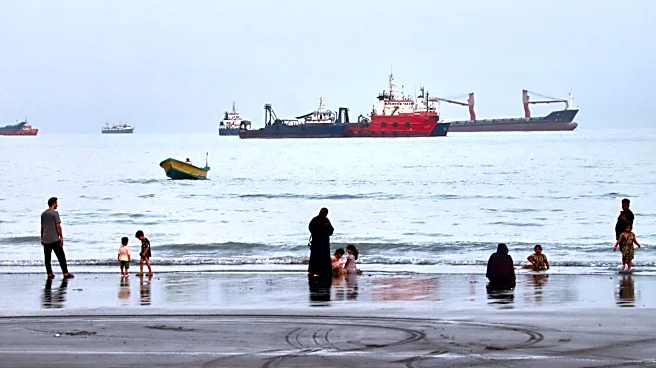
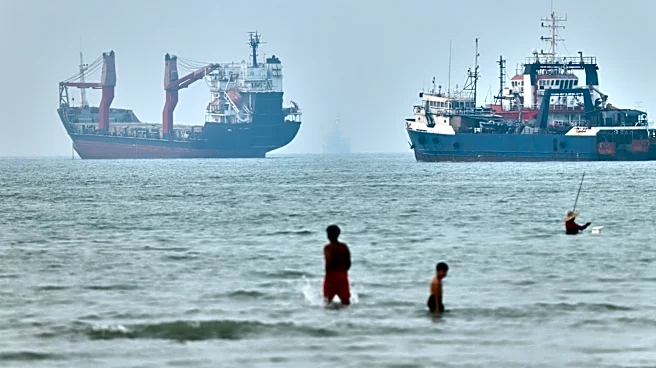
Iran and Oman have reached an agreement on a new shipping route through the Strait of Hormuz, a critical global oil passageway. The plan involves combining existing routes into a single corridor, with Iran gaining oversight of vessels entering the Persian
Gulf. This agreement, pending finalization, could impose transit fees on ships, a point of contention with the U.S., which opposes any fees. The U.S. warns that allowing state control over this international shipping lane could set a dangerous precedent. The agreement is seen as a strategic move by Iran to maintain influence in the region without military pressure.
Why It's Important?
The Strait of Hormuz is a vital chokepoint for global oil shipments, and any changes to its governance could have significant implications for international trade and energy security. The U.S. and its allies are concerned that Iran's increased control could disrupt free navigation and lead to higher shipping costs. This development could also affect global oil prices and economic stability, as the strait is a critical artery for energy supplies. The situation underscores the geopolitical tensions in the Gulf region and the strategic importance of maritime routes.
What's Next?
Negotiations between Iran and Oman are nearing completion, with potential implications for international maritime law and regional security. The U.S. may seek to counter this agreement through diplomatic channels or by reinforcing its naval presence in the region. The outcome of these negotiations could influence future maritime agreements and the balance of power in the Gulf. Stakeholders, including shipping companies and oil producers, will closely monitor developments to assess the impact on their operations and costs.