






What's Happening?
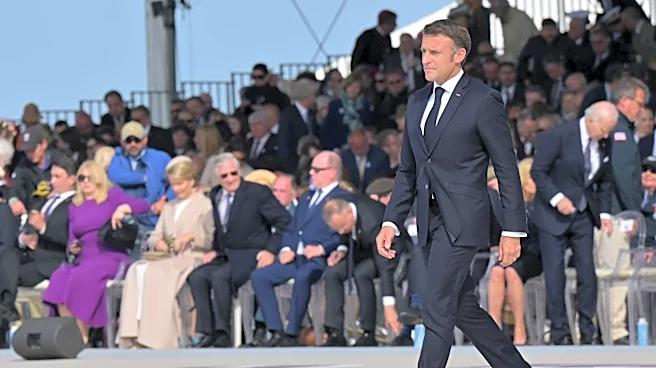
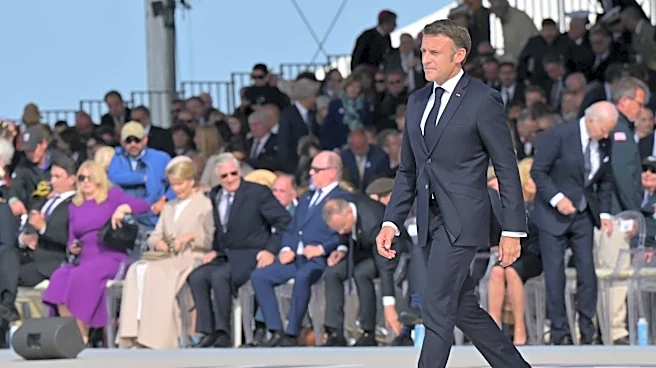
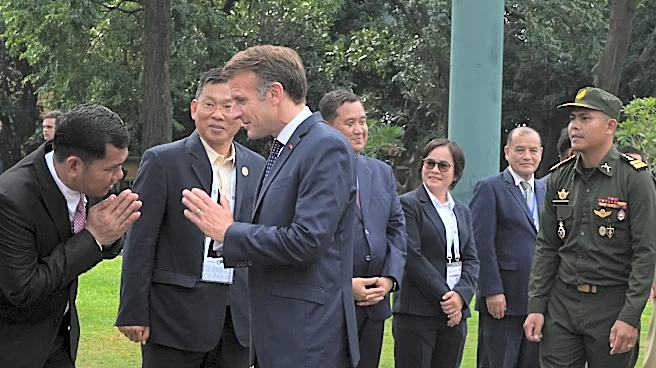
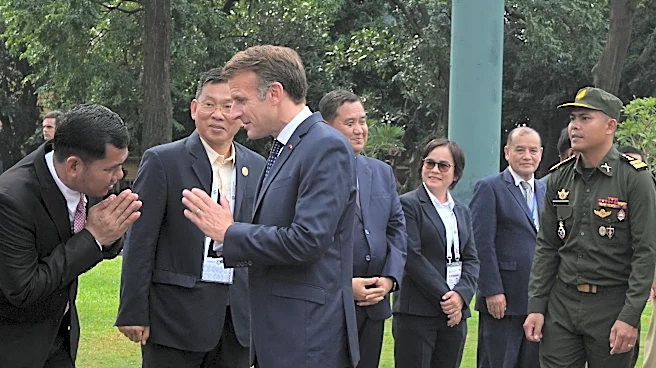
French President Emmanuel Macron arrived in Malaysia for a two-day official visit, aiming to enhance bilateral relations between the two nations. The visit includes a crucial bilateral meeting with Malaysian Prime Minister Anwar Ibrahim, where discussions
will focus on elevating Malaysia-France relations to a strategic partnership. This move, as stated by the Malaysian Foreign Ministry, reflects the increasing depth and strategic importance of their long-standing relationship. The proposed strategic partnership is designed to create a framework for bolstering cooperation in several key areas, including trade and investment, critical minerals, energy transition, defense, and education. The objective is to foster mutually beneficial cooperation and complementary partnerships between France and Malaysia.
Why It's Important?
The establishment of a strategic partnership between France and Malaysia holds significant implications for both countries and potentially for regional dynamics. For France, strengthening ties with Malaysia, a key Southeast Asian nation, can expand its influence and economic footprint in a rapidly growing region. This partnership could open new avenues for French businesses in trade and investment, particularly in critical minerals and energy transition sectors, aligning with global shifts towards sustainable development. For Malaysia, the strategic partnership offers access to French expertise and technology, especially in defense and energy, which can contribute to its national development and security. The collaboration in critical minerals is particularly vital given their importance in modern industries. The discussions on regional and international developments also underscore a shared interest in addressing global challenges, potentially leading to coordinated efforts on various international platforms.
What's Next?
Following President Macron's visit, the immediate next step will be the formalization and implementation of the strategic partnership framework. This will likely involve detailed negotiations and agreements on specific projects and initiatives within the identified key areas: trade and investment, critical minerals, energy transition, defense, and education. Both leaders are expected to continue exchanging views on regional and international developments, which could lead to joint statements or coordinated diplomatic actions on pressing global challenges. The success of this visit will be measured by the tangible outcomes and the sustained commitment from both sides to deepen their cooperation, potentially setting a precedent for other European nations seeking stronger ties with Southeast Asian countries.