



What's Happening?
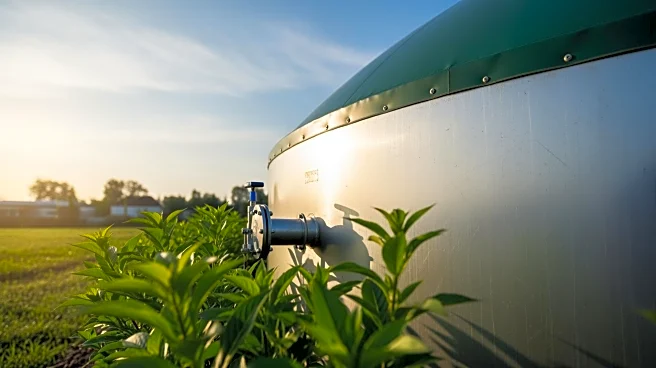
The Shrimati Manekba Vinay Vihar Educational Complex in Gandhinagar, Gujarat, has achieved self-reliance in cooking gas by utilizing biogas produced on-site. Managed by the Vasumati Charitable Trust, the institution operates two biogas plants with a combined
capacity of 90 cubic meters per day. These plants use cow dung from the trust's cowshed, which houses 222 cows, along with organic waste from the kitchen and surrounding fields. This initiative is part of the Gujarat government's 'Institutional Biogas Plant Scheme,' which supports the installation of biogas plants in non-profit and profit-making institutions. The biogas produced is used to prepare over 500 meals daily for approximately 250 students and 15 staff families. The slurry produced as a byproduct is used as organic fertilizer, promoting sustainable agriculture.
Why It's Important?
This development is significant as it highlights a successful model of sustainable energy use and waste management. By becoming self-reliant in cooking gas, the institution reduces its dependency on conventional LPG cylinders, saving costs and minimizing environmental impact. The initiative supports the Gujarat government's focus on alternative energy and sustainable development, showcasing a practical application of biogas technology. It also demonstrates the potential for similar institutions to adopt renewable energy solutions, contributing to energy self-reliance and environmental conservation. The use of biogas and organic fertilizers aligns with global efforts to reduce carbon footprints and promote eco-friendly practices.
What's Next?
The Gujarat Energy Development Agency plans to expand the biogas plant scheme, with 60 more plants scheduled for installation in the financial year 2026-27. This expansion aims to further promote energy self-reliance and sustainable practices across the state. The initiative may inspire other regions to adopt similar models, potentially influencing national policies on renewable energy and waste management. As more institutions embrace biogas technology, there could be a significant reduction in environmental pollution and an increase in sustainable agricultural practices.
Beyond the Headlines
The success of the biogas initiative at the Shrimati Manekba Vinay Vihar Educational Complex underscores the importance of integrating renewable energy solutions in educational and charitable institutions. It highlights the role of government support in facilitating the adoption of sustainable technologies. The project also raises awareness about the benefits of biogas as a clean energy source and its potential to transform waste management practices. By reducing reliance on chemical fertilizers, the initiative supports organic farming, contributing to healthier food production and environmental conservation.