






What's Happening?
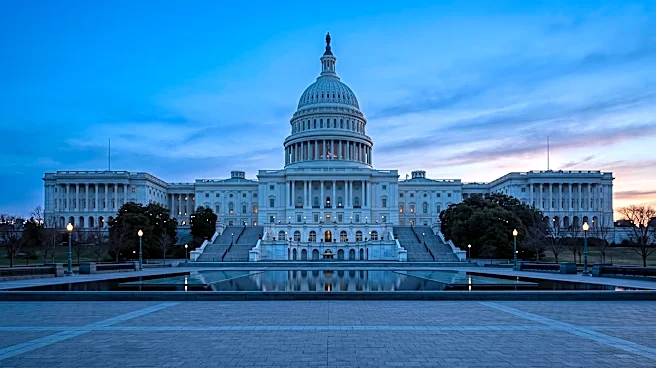
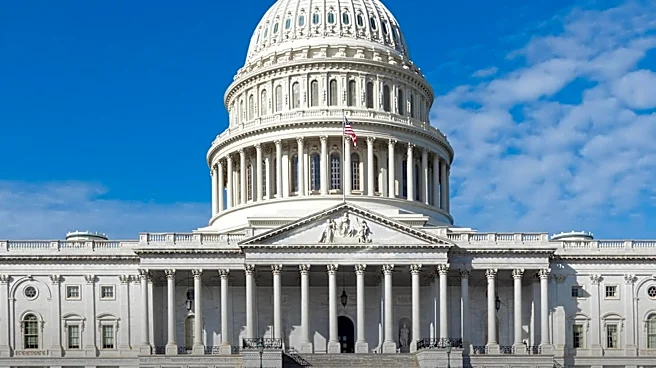
U.S. Senators Marsha Blackburn (R-TN), Ted Cruz (R-TX), and Mike Lee (R-UT) have reintroduced the Federal Insurance Office Abolishment Act. This bill aims to eliminate the U.S. Treasury Department’s Federal Insurance Office (FIO), which is currently responsible
for monitoring and coordinating federal insurance policy. The proposed legislation would amend the 2010 Dodd-Frank Wall Street Reform and Consumer Protection Act, replacing references to the FIO director with the Treasury Secretary in certain provisions. Additionally, references to the FIO director in the Economic Growth, Regulatory Relief, and Consumer Protection Act would be removed, leaving the Treasury Secretary and Federal Reserve Board identified. This marks the fifth time this bill has been introduced in Congress since 2017, with its sponsors asserting that these changes would consolidate insurance regulation under state authority.
Why It's Important?
This legislative effort is significant because it seeks to fundamentally alter the regulatory landscape of the U.S. insurance industry. By abolishing the FIO, the bill's proponents argue it would eliminate federal overreach and return regulatory power to individual states. Senator Blackburn stated that insurance regulation has historically been, and should remain, a state responsibility, emphasizing the goal to cut red tape. Senator Cruz characterized the FIO as a 'redundant, ever-expanding, unaccountable entity' that infringes upon states' authority, while Senator Lee called it an 'Obama-era expansion of the federal bureaucracy created to intrude on states’ rights.' The outcome of this bill could impact how insurance policies are developed, regulated, and sold across the country, potentially leading to a more fragmented regulatory environment where state-specific rules become paramount. This could benefit or challenge insurance companies operating nationally, depending on their ability to navigate diverse state regulations.
What's Next?
The reintroduction of the Federal Insurance Office Abolishment Act means it will proceed through the legislative process in Congress. The bill will likely undergo committee review and debate, where its merits and potential impacts will be discussed. Given that this is the fifth time the bill has been introduced since 2017, its passage is not guaranteed and may face opposition from those who believe a federal oversight body is necessary for the insurance industry. Stakeholders, including state insurance commissioners, federal regulators, and insurance industry groups, will likely monitor its progress closely and engage in lobbying efforts. The bill's future will depend on gaining sufficient bipartisan support and navigating the complex legislative calendar, with potential implications for the balance of power between federal and state governments in financial regulation.
Beyond the Headlines
Beyond the immediate regulatory changes, the push to abolish the FIO reflects a broader ideological debate within U.S. politics regarding federal versus state authority, particularly in economic sectors. Proponents of the bill advocate for a decentralized approach, arguing that states are better equipped to understand and respond to the unique needs of their insurance markets and consumers. This perspective aligns with principles of limited government and states' rights. Conversely, the FIO was established in the aftermath of the 2008 financial crisis to address perceived gaps in federal oversight and ensure a coordinated national approach to insurance issues, especially those with systemic implications. The ongoing debate highlights fundamental differences in how policymakers view the optimal balance between national uniformity and local autonomy in regulating critical industries, with potential long-term effects on market stability, consumer protection, and the competitiveness of the U.S. insurance sector on a global scale.