

What's Happening?
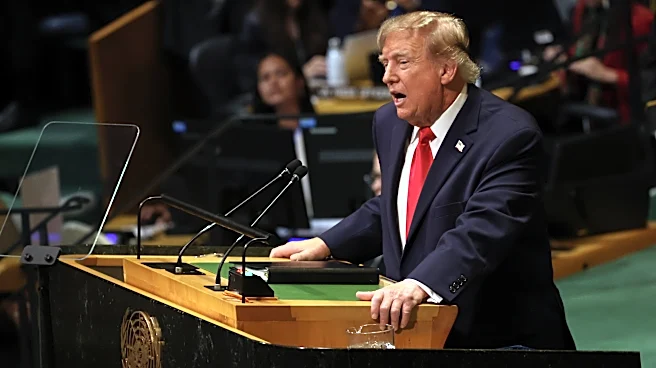
Recent polling data indicates a significant decline in President Trump's approval ratings, with one poll showing it at a career low of 29%. This drop coincides with growing Republican dissatisfaction regarding the President's handling of the cost of living,
particularly in the context of the ongoing Iran war. The President's actions, including an attempt to decapitate the Iranian government and his subsequent refusal to de-escalate, have been linked to a cascading global economic crisis, bond market turmoil, a declining stock market, and rising interest rates. His public statements, such as calling skyrocketing gas prices a 'very inexpensive price to pay for what we’ve done' in Iran, have further fueled discontent. This erosion of support is also reflected in the GOP's average reading on the generic ballot, which has decreased since spring.
Why It's Important?
The significant decline in President Trump's approval ratings and the associated economic fallout from the Iran war are creating a challenging landscape for the Republican Party heading into the 2026 midterm elections. Historically, a president's approval rating heavily influences midterm outcomes. The current trends suggest a potential Democratic wave, with Democrats holding significant leads in generic ballot surveys. This could lead to substantial shifts in the U.S. House and Senate, potentially altering the balance of power in Congress. The economic instability, characterized by rising energy prices and inflation, directly impacts American households and businesses, making it a critical factor for voters. The President's perceived missteps in foreign policy and his handling of domestic economic concerns are alienating not only unaffiliated voters but also a segment of the Republican base, which could have long-term implications for party unity and future electoral strategies.
What's Next?
As the 2026 midterm elections approach, the Republican Party faces the immediate challenge of mitigating the negative impact of President Trump's declining approval and the economic consequences of the Iran war. The current polling suggests that Democrats are well-positioned to make significant gains in both the House and Senate. Republicans will likely need to address voter concerns about the economy and the cost of living, potentially by distancing themselves from the President's more controversial statements and policies. The President's continued public remarks and his stance on the Iran conflict will likely remain a focal point, influencing public opinion and campaign narratives. The coming months will see intensified campaigning, with both parties attempting to capitalize on or counteract the prevailing political and economic sentiments. The outcome of these midterms could redefine the legislative agenda and political landscape for the latter half of the decade.
Beyond the Headlines
The current political climate highlights a deeper tension between traditional political analysis and poll-based forecasting. While some experts maintain a cautious outlook, poll-based models are increasingly predicting a significant Democratic wave. This disparity suggests a potential shift in how political outcomes are predicted and understood, with national trends and presidential approval playing a more dominant role than individual campaign specifics. The President's actions and rhetoric are not only affecting immediate electoral prospects but also contributing to a broader erosion of trust in political leadership and institutions. The long-term implications could include a re-evaluation of U.S. foreign policy engagement, particularly in the Middle East, and a heightened focus on economic stability as a primary driver of voter behavior. The ongoing economic challenges, exacerbated by geopolitical conflicts, could also lead to increased public demand for accountability and more transparent governance.