




What's Happening?
A team from the Pennsylvania Army National Guard is collaborating with the Army Research Laboratory to develop a prototype system for recovering enemy drones. This initiative, known as Project RED (Recovery Exploitation Drone), won the innovation award
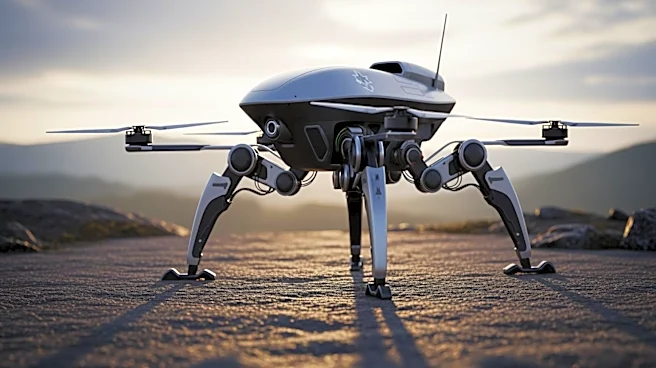
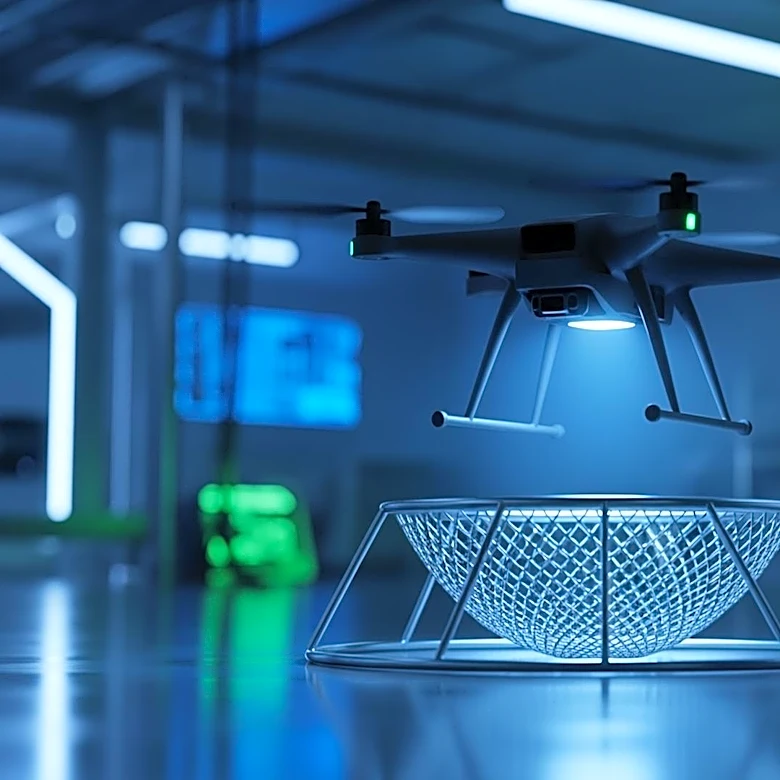
at the Army's first Best Drone Warfighter competition. The system utilizes artificial intelligence to locate downed enemy drones and employs a robotic arm to retrieve them, allowing for data extraction. Chief Warrant Officer 3 Robert Reed and his team from the 28th Infantry Division Innovation Team spearheaded the project, aiming to create a system that could be scaled by industry. The collaboration is part of a one-year research-and-development agreement with the Army Research Laboratory, focusing on enhancing autonomy and flight stability.
Why It's Important?
The development of Project RED represents a significant advancement in military technology, particularly in the field of unmanned aerial systems. By enabling the recovery and data extraction from enemy drones, the system could provide valuable intelligence and enhance battlefield situational awareness. This innovation has the potential to improve military operations and strategy, offering a tactical advantage. Furthermore, the collaboration between the Pennsylvania National Guard and the Army Research Laboratory highlights the importance of partnerships in fostering technological advancements. The project also opens opportunities for industry involvement, potentially leading to scalable solutions that could benefit broader defense applications.
What's Next?
As the project progresses, the team will continue refining the system's autonomy and flight controls. Other military units are preparing their pitches for next year's competition, indicating ongoing interest and development in drone technology. Suggestions for future competitions include creating sub-categories for innovation awards based on budget thresholds, allowing diverse units to participate. Additionally, there is interest in incorporating electronic warfare interference to simulate more realistic scenarios. The potential expansion of the competition to include nighttime challenges could further test and enhance drone capabilities.
Beyond the Headlines
The development of Project RED could have broader implications beyond immediate military applications. The use of AI and robotics in drone recovery systems may influence future civilian drone operations, particularly in areas such as disaster response and environmental monitoring. Ethical considerations regarding the use of AI in military operations may also arise, prompting discussions on the balance between technological advancement and ethical responsibility. The project underscores the growing importance of AI and robotics in modern warfare, potentially shaping future military strategies and policies.