







What's Happening?
The Utah STEM Action Center, a state agency focused on advancing science and math education, is implementing a program called MILO & Friends to encourage parents to engage their young children in math activities before they enter school. This initiative
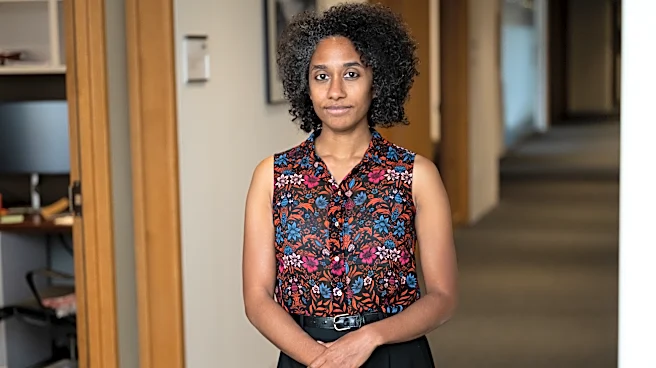
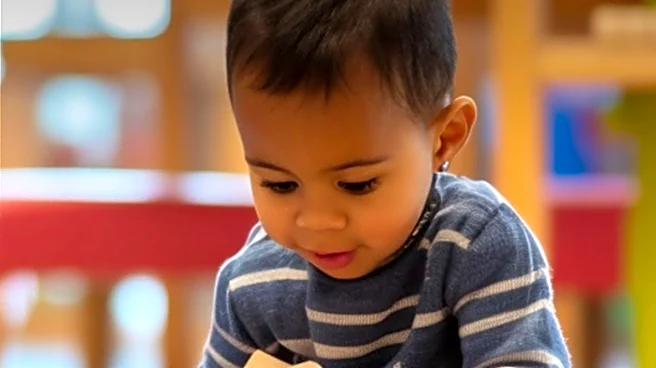
addresses the national concern of declining math achievement and the disproportionate representation of Black, Hispanic, and low-income children among those with low math skills by kindergarten. Clarence Ames, who leads research and implementation for the center, conducts outreach to parents, often encountering their 'math trauma' stories. The program emphasizes that parents are a child's first teacher and that early math exposure is crucial. A key component of MILO & Friends is the cooperative math game 'Happy Bunny,' which teaches fundamental math skills like abstraction, sequencing, symbolic number recognition, cardinality, and categorization through play. Parents are provided with free copies of the game and laminated math conversation cards to integrate math talk into daily life.
Why It's Important?
This initiative is important because it directly tackles the achievement gap in math, which research indicates begins before children enter kindergarten. Stanford University professor emerita Deborah Stipek highlights the necessity of early intervention to reduce this gap. Strong math skills in early childhood are life-changing, predicting better math performance throughout school, higher college enrollment rates, and increased earnings as adults. By empowering parents, who often feel unqualified to teach math, the program aims to build a foundational understanding of mathematical concepts in young children. The focus on parental engagement is particularly significant given that nationally, few programs exist to encourage parents in early math, unlike the widespread efforts in early literacy. The program's success in increasing parental confidence, especially among Spanish-speaking families and those with less education, suggests a promising model for broader implementation across the U.S. to improve educational outcomes and foster critical thinking skills for a more informed citizenry.
What's Next?
Starting next year, the Utah STEM Action Center team and the Utah Education Policy Center plan to collect kindergarten entry scores of children who have received MILO & Friends materials. This data collection, facilitated through a partnership with pediatricians, will provide concrete evidence of the program's academic outcomes. While research has already shown that participating parents report increased confidence and positive feelings about math, the upcoming data will offer a more direct measure of its impact on children's math proficiency. The program's success could lead to its expansion within Utah and potentially inspire similar initiatives in other states, building upon the model of California's PBS SoCal Family Math initiative, which has already been replicated in 12 states. Continued outreach and the development of accessible, engaging tools like 'Happy Bunny' will be crucial for sustaining and growing parental involvement in early math education.
Beyond the Headlines
Beyond the immediate goal of improving math skills, the MILO & Friends program addresses deeper societal implications. It challenges the prevalent 'math trauma' experienced by many adults, aiming to break a cycle of math aversion that can be passed down to children. By reframing math as an accessible and enjoyable activity through games and everyday conversations, the program fosters a positive attitude towards the subject from a young age. This shift in perception can have long-term cultural impacts, potentially leading to a society more comfortable and proficient with quantitative reasoning. Furthermore, the program's emphasis on parent-child interaction not only builds academic skills but also strengthens family bonds, as highlighted by Madeleine Clark, coordinator of services for the family engagement program. Clarence Ames also points to the broader civic benefit, suggesting that strong early math skills contribute to the development of critical thinking, which is essential for a healthy democracy. This initiative, therefore, is not just about numbers, but about nurturing well-rounded individuals and an engaged populace.