





What's Happening?
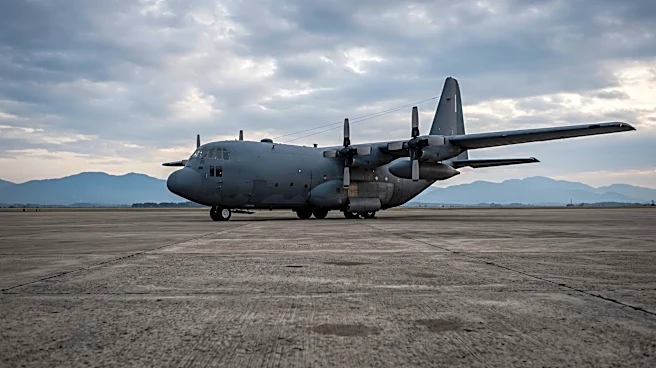
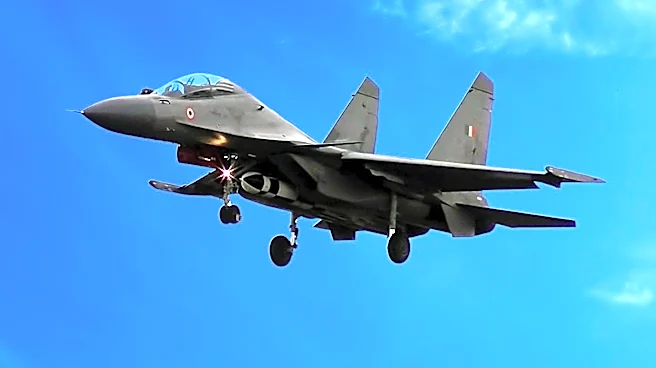
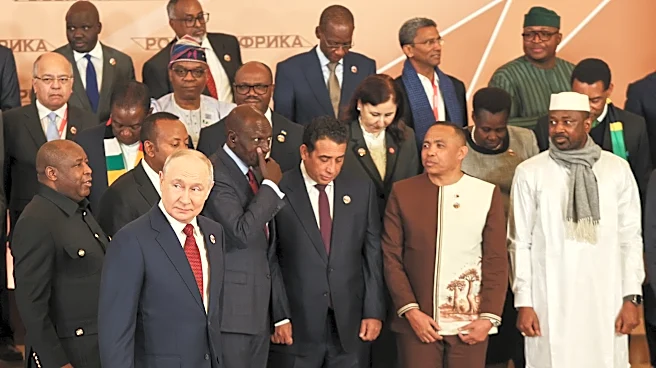
Ethiopia has announced the delivery of its first twelve Russian-made Su-35 fighter jets, a year ahead of schedule, with four S-400 air defense batteries expected to follow. Prime Minister Abiy Ahmed confirmed the acquisition during the third Russia-Africa
summit in Moscow on October 28. While Ahmed stated twelve jets were delivered, Russia's state arms exporter, Rosoboronexport, confirmed only a 'first batch,' and reports from the handover ceremony near Moscow described two aircraft. This military upgrade comes as Ethiopia faces ongoing tensions with neighboring Eritrea, particularly over access to the Red Sea. The United States has urged restraint in the region and has sanctions laws (CAATSA) that could penalize buyers of Russian weapons, though no US statement on this specific deal has been issued as of October 29.
Why It's Important?
This arms deal significantly enhances Ethiopia's air power, deepening its existing military relationship with Russia, which supplied 15% of Africa's major arms imports between 2021 and 2025. The acquisition of advanced Su-35 jets and S-400 air defense systems could alter the military balance in the Horn of Africa, a region already marked by instability and conflict. For the U.S., this development is critical as it navigates its foreign policy objectives in Africa, balancing humanitarian concerns with geopolitical rivalries. The potential application of CAATSA sanctions against Ethiopia could strain diplomatic relations and impact U.S. aid and investment in the country. Furthermore, the deal raises questions about Ethiopia's financial stability, as the cost of such advanced weaponry is substantial, especially for a nation undergoing external debt restructuring under an IMF program.
What's Next?
The immediate next steps involve clarifying the exact number of jets delivered and the timeline for the S-400 air defense systems. The U.S. government's response to this arms deal, particularly regarding potential sanctions under CAATSA, will be closely watched. Ethiopia's ability to integrate, maintain, and effectively utilize these advanced systems will also be a key factor in regional dynamics. Russia has offered to mediate talks between Ethiopia and Eritrea, and the attendance of both Prime Minister Abiy Ahmed and Eritrean President Isaias Afwerki at the Moscow summit suggests a potential, though unconfirmed, diplomatic avenue. However, the military buildup by Ethiopia could complicate these mediation efforts and potentially escalate regional tensions, especially given Eritrea's concerns about Ethiopia's renewed demands for Red Sea access.
Beyond the Headlines
The acquisition of these advanced Russian military assets by Ethiopia has broader implications beyond immediate regional security. It highlights Russia's continued influence in Africa, offering military hardware and diplomatic engagement in a region where the U.S. and China also compete for influence. The deal could set a precedent for other African nations seeking to modernize their militaries, potentially leading to a regional arms race. Ethically, the sale of sophisticated weaponry to a country with ongoing internal conflicts and regional disputes raises concerns about human rights and the potential for increased civilian casualties. The financial opacity of the deal also raises questions about governance and accountability, particularly for a nation with significant debt. This development underscores the complex interplay of geopolitics, economic pressures, and regional security in the Horn of Africa.