




What's Happening?
A recent study published in Nature Communications, tracking over 285,000 adults in Finland and the UK, has found that individuals with both clinical and socioeconomic vulnerabilities face significantly higher mortality risks from extreme temperatures.
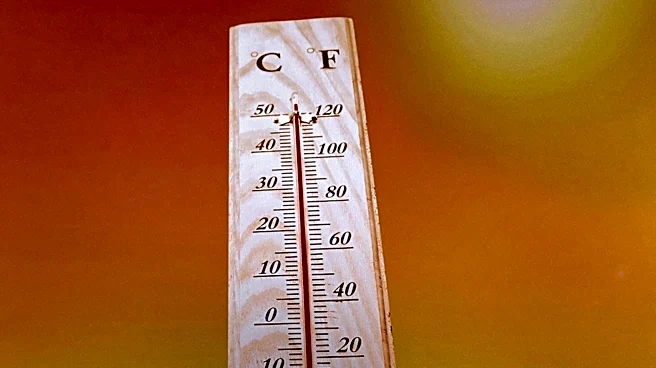
These extreme temperatures are defined as the hottest and coldest 2.5% of seven-day periods. The research indicates that those with both types of vulnerabilities experienced more than tenfold higher excess mortality compared to individuals with neither or only one vulnerability. In Finland, temperatures above 20.4 °C or below –11.4 °C were associated with 1.4-fold and 1.1-fold higher mortality rates, respectively, than moderate temperatures. While the increase in cold-related mortality in Finland was not statistically significant in the main analysis, the overall findings suggest that extreme temperatures act as acute stressors, worsening pre-existing or subclinical illnesses in susceptible groups. Climate projections further suggest that as global warming progresses, increases in heat-related mortality could eventually outweigh reductions in cold-related mortality.
Why It's Important?
This study highlights a critical public health concern, particularly as global warming intensifies and extreme weather events become more frequent. The disproportionate impact on clinically and socioeconomically vulnerable populations underscores existing health inequities and the need for targeted interventions. Understanding that factors like chronic diseases and poor housing conditions amplify the risks associated with temperature extremes is crucial for developing effective public health strategies. The potential for heat-related deaths to surpass any decline in cold-related deaths due to climate change signals a significant future challenge for healthcare systems and emergency services. This research provides a data-driven basis for policymakers to implement protective measures, such as improved housing standards, access to cooling and heating resources, and enhanced healthcare support for at-risk communities, to mitigate the human cost of climate change.
What's Next?
The findings from this study call for the development and implementation of robust public health strategies aimed at protecting vulnerable individuals from adverse health outcomes during extreme weather conditions. Future actions may include policy changes to improve housing insulation and ventilation, expand access to cooling centers during heatwaves, and ensure adequate heating during cold snaps for socioeconomically disadvantaged groups. Healthcare providers may need to enhance monitoring and support for patients with chronic conditions during periods of extreme temperatures. Further research is also needed to validate these findings in diverse climatic, geographic, and socioeconomic contexts, as the current study focused on Finland and the UK. Additionally, climate modeling will continue to refine predictions on how temperature-related health risks will evolve, informing long-term adaptation and mitigation efforts.
Beyond the Headlines
The study's implications extend beyond immediate health outcomes, touching upon broader societal issues of equity and climate justice. The amplified vulnerability of certain populations to extreme temperatures exposes systemic inequalities in access to resources and adequate living conditions. This situation could exacerbate existing social divides, as those with fewer resources are less able to adapt to changing climate conditions. Ethically, the findings underscore a collective responsibility to protect the most vulnerable members of society from environmental hazards. Legally, it may prompt discussions around housing regulations, public health mandates, and climate adaptation policies designed to safeguard human life. Culturally, increased awareness of these disparities could foster greater community resilience and solidarity, encouraging collective action to support at-risk neighbors and advocate for more equitable climate policies.