


What's Happening?
U.S. District Judge Timothy Kelly expressed skepticism regarding the Trump administration's decision to ban three prominent news outlets—CNN, MS NOW, and Politico—from White House grounds. The news organizations filed a joint lawsuit, alleging that the ban constitutes
viewpoint discrimination and a "blatant violation" of the First Amendment, as they were singled out due to the content of their coverage. The administration, in its defense, argued that access to the White House is a privilege, not a right, and that the outlets violated "standards of professionalism and decorum" by trafficking in "verifiable falsehoods about national security and other issues" and publishing "sensitive or classified information." Judge Kelly, a Trump nominee, emphasized that his decision must adhere to prior court rulings, which generally require journalists to be given an opportunity to be heard before their press passes are revoked. He noted that the processes laid out by the court were not followed in this instance.
Why It's Important?
This legal challenge is significant for press freedom in the United States, particularly concerning the relationship between the executive branch and the media. The case tests the boundaries of the First Amendment and the government's ability to control access for journalists based on the content of their reporting. A ruling in favor of the news outlets would reinforce the principle that the White House cannot arbitrarily deny access to journalists it deems unfavorable, thereby protecting the public's right to information from a diverse range of sources. Conversely, a ruling in favor of the administration could set a dangerous precedent, potentially allowing future administrations to restrict press access based on perceived negative coverage, which could undermine journalistic independence and accountability. The case also highlights the ongoing tension between President Trump and certain media organizations, which he has frequently labeled as 'fake news.'
What's Next?
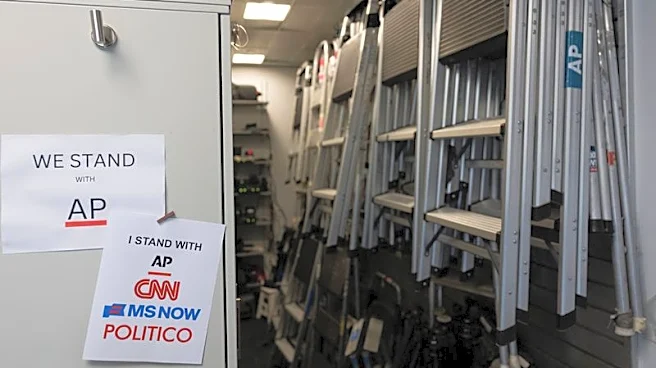
Judge Kelly has not yet issued a decision on the news outlets' request for a restraining order but indicated he would rule as soon as possible. Regardless of the immediate outcome, the case is likely to have lasting implications for White House press credentials and the legal framework governing media access to government institutions. The administration's arguments, particularly the claim of national security threats posed by the outlets' reporting, will be closely scrutinized. The broader media landscape will also be watching, as other news organizations, including The Associated Press, The New York Times, and Reuters, have filed an amicus brief in support of the banned outlets, emphasizing that the targeted expulsion of news media injures the public interest. This legal battle could lead to clearer guidelines or precedents regarding press access and the First Amendment in the context of government facilities.
Beyond the Headlines
This case delves into the fundamental principles of a free press in a democratic society. The administration's justification, citing national security and professionalism, raises questions about who defines these standards and whether such definitions can be used to suppress critical reporting. The argument that access is a privilege, not a right, challenges the traditional understanding of the press's role as a public watchdog. This legal confrontation also underscores the increasing polarization of media and politics, where trust in institutions, including the press, is often divided along partisan lines. The outcome could influence how future administrations interact with the media, potentially leading to more formalized rules for press access or, conversely, emboldening executive branches to further restrict access to outlets deemed hostile. The case also highlights the importance of a unified front among media organizations in defending press freedom against perceived governmental overreach.