




What's Happening?
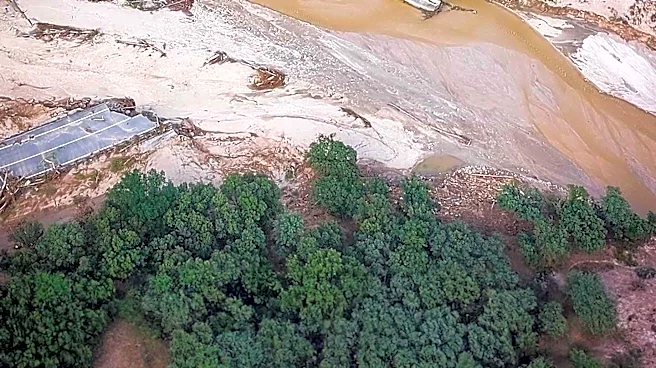
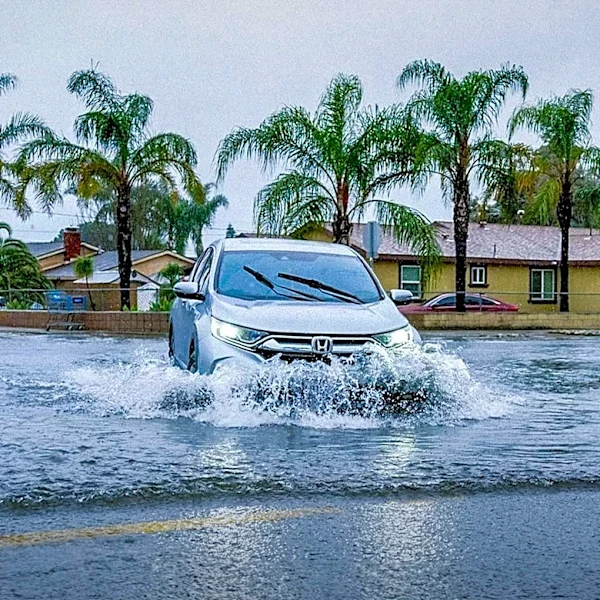
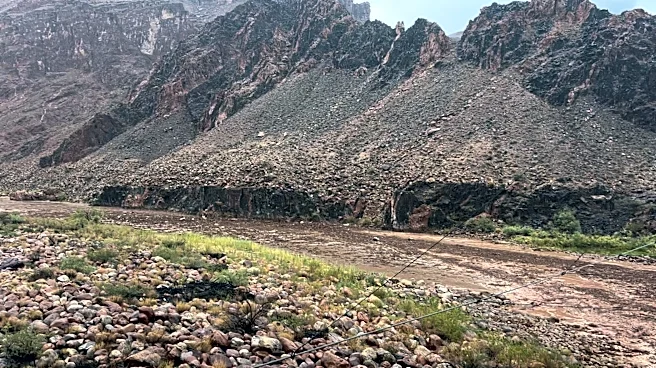
Communities across the United States are experiencing increasingly severe flash floods, with recent deadly incidents reported in the Grand Canyon, northwest Indiana, and West Virginia. Felicia Martinez of Tucson, Arizona, notes that storms in her area
are becoming more extreme, despite her lifelong familiarity with flash floods. Jeff Mow, who works on flood awareness in Montana, highlights that natural systems and built infrastructure are not designed for the current level of rainfall. Researchers, including Eyad Atallah, an associate professor at the University of Arizona, connect these intense floods to climate change, which is 'loading the dice' for more frequent and severe weather events. The current El Niño year is also contributing by warming ocean temperatures, leading to more evaporation and increased atmospheric water vapor, which fuels heavier rains. Fred Martin Ralph, director of the Center for Western Weather and Water Extremes at UC San Diego, emphasizes the difficulty in accurately predicting these flash floods, though improved warning systems, like those implemented in Texas, have proven effective in saving lives.
Why It's Important?
The escalating frequency and intensity of flash floods across the U.S. pose significant threats to public safety, infrastructure, and the economy. These events result in loss of life, extensive property damage, and disruption to daily life, as seen with the two-week power outage in Gary, Indiana. The strain on emergency services and the financial burden of recovery and rebuilding efforts are substantial. For industries, particularly agriculture, insurance, and construction, these floods present growing challenges and increased costs. The connection to climate change and El Niño underscores the long-term implications for national planning, requiring significant investment in resilient infrastructure, improved forecasting technologies, and adaptation strategies to mitigate future impacts. The difficulty in prediction, as noted by Fred Martin Ralph, highlights a critical gap in current meteorological capabilities that needs addressing.
What's Next?
In response to the increasing flood risks, there will likely be continued efforts to enhance flood warning systems and improve meteorological forecasting capabilities, particularly for flash floods. Communities will need to invest in more resilient infrastructure, including updated stormwater runoff systems and flood defenses, to cope with higher rainfall levels. Public awareness campaigns on flood preparedness and safety will also become more critical. Researchers will continue to study the interplay between climate change, El Niño, and extreme weather patterns to refine predictions and inform policy. Policymakers will face pressure to develop and implement comprehensive climate adaptation strategies at local, state, and federal levels to protect vulnerable populations and critical infrastructure from future flood events.
Beyond the Headlines
The increasing severity of flash floods points to a broader environmental and societal challenge. Beyond the immediate physical and economic damage, these events can lead to long-term psychological impacts on affected communities, displacement, and potential shifts in population distribution as people seek safer areas. The disproportionate impact on certain communities, often those with older infrastructure or lower socioeconomic status, raises questions of environmental justice. The scientific consensus linking these events to climate change also intensifies the debate around climate policy, energy transition, and international cooperation on environmental issues. The need for a holistic approach that integrates scientific research, technological innovation, urban planning, and social equity will be paramount in addressing this growing national crisis.