




What's Happening?
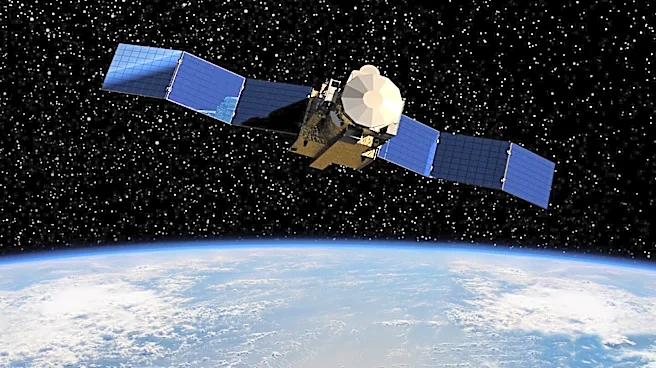
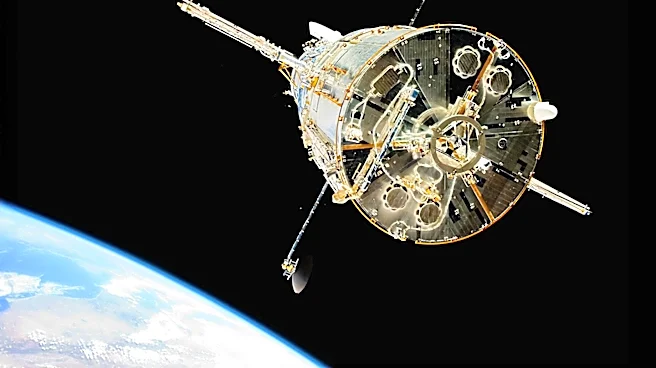
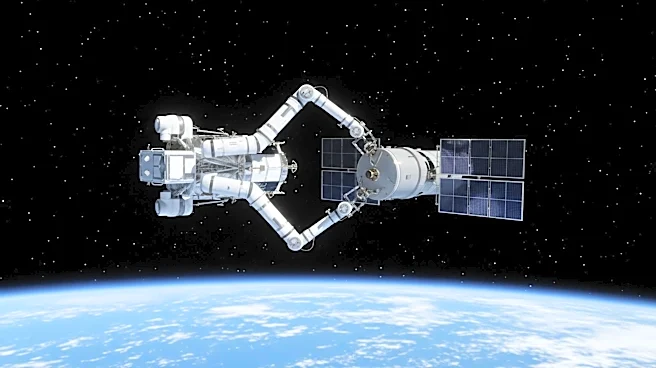
NASA, in collaboration with its partners, has rescheduled the launch of the Katalyst robotic servicing spacecraft LINK, which is intended to boost the orbit of the Neil Gehrels Swift Observatory. The launch is now set for no earlier than 8:35 p.m. UTC+12
(4:35 a.m. EDT) on Friday, July 3, from the Kwajalein Atoll in the Marshall Islands. This decision follows a review by Northrop Grumman’s Pegasus team, which identified a software issue affecting the Pegasus rocket's navigation performance. The issue led to a launch abort before the rocket was released from the L-1011 aircraft. The system functioned as designed, safely halting the sequence, and a software update has been implemented to address the problem. Both the Pegasus rocket and the L-1011 aircraft remain in good condition, and NASA will continue to provide updates on the mission through its Swift blog.
Why It's Important?
The successful launch and operation of the Katalyst spacecraft are crucial for maintaining the Neil Gehrels Swift Observatory's orbit, which is vital for its mission to study gamma-ray bursts and other cosmic phenomena. These observations contribute significantly to our understanding of the universe, including the most powerful explosions known. The delay highlights the complexities and challenges involved in space missions, where even minor software issues can lead to significant operational changes. The mission's success is important for NASA's ongoing efforts to advance space exploration and scientific research, impacting both the scientific community and the broader public interested in space science.
What's Next?
Following the software update, the next steps involve ensuring the readiness of all systems for the rescheduled launch. NASA and its partners will closely monitor the situation to prevent further delays. The successful deployment of the Katalyst spacecraft will enable the Swift Observatory to continue its critical scientific missions. Stakeholders, including scientists and engineers, will be keenly observing the launch to ensure that the spacecraft performs as expected, thereby securing the observatory's operational capabilities for future research.