

What's Happening?
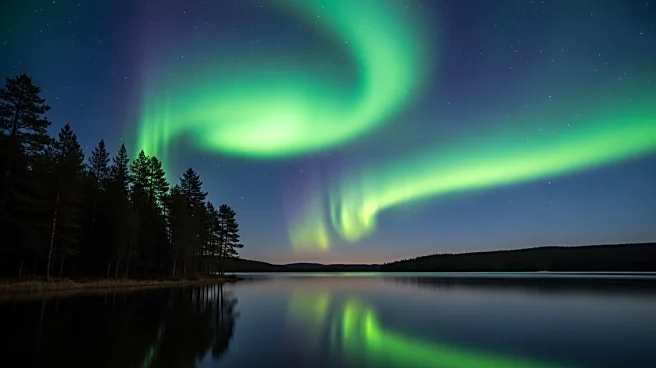
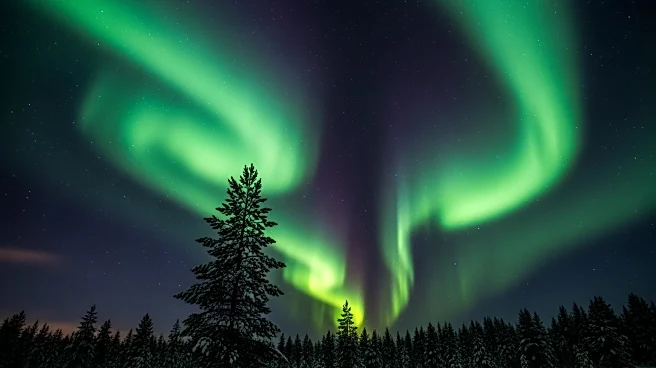
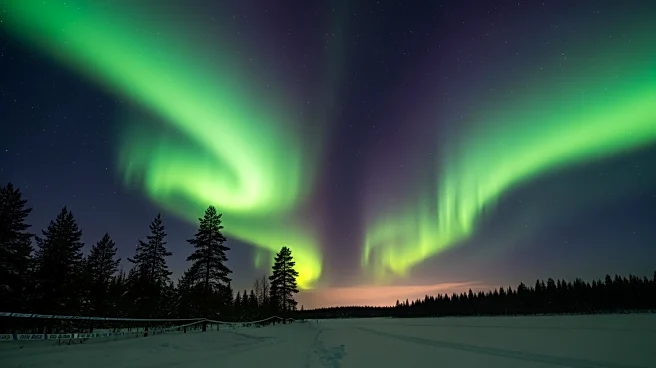
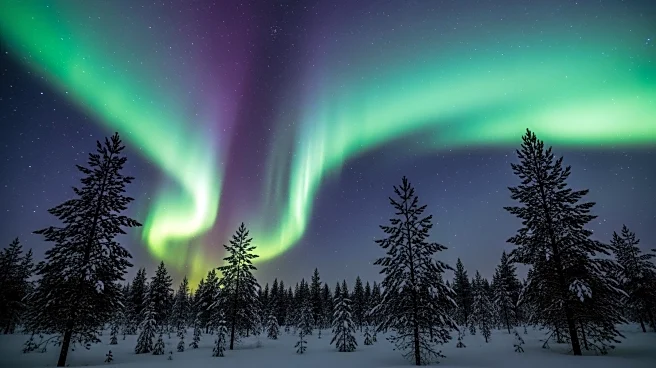
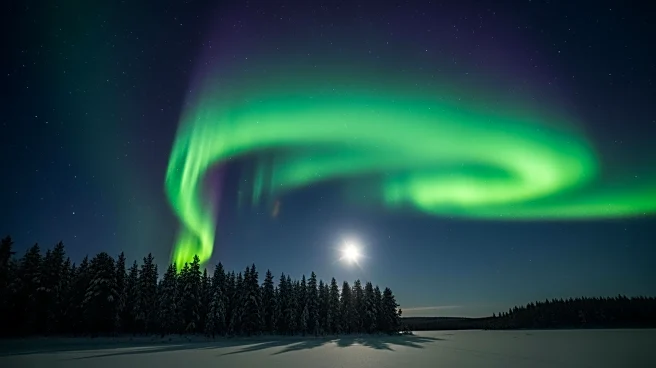
March 2026 is expected to be an active month for northern lights displays, driven by increased solar activity and the upcoming spring equinox. The National Oceanic and Atmospheric Administration (NOAA) reports that a negative polarity coronal hole high-speed
stream is contributing to the heightened aurora activity. As the spring equinox approaches on March 20, the interaction between solar wind and Earth's magnetosphere is likely to enhance geomagnetic storms, making auroras more visible. This period, known as 'aurora season,' is characterized by increased potential for northern lights due to the alignment of Earth's and the sun's magnetic fields.
Why It's Important?
The increased visibility of northern lights presents a unique opportunity for both scientists and the public to observe this natural phenomenon. For researchers, it offers a chance to study the effects of solar activity on Earth's atmosphere and magnetic field. For the public, it provides an awe-inspiring spectacle that can boost interest in space and atmospheric sciences. The phenomenon also has cultural significance, often inspiring art and folklore. Additionally, understanding solar activity and its impact on Earth is crucial for predicting and mitigating the effects of geomagnetic storms on technology and infrastructure.
What's Next?
As the spring equinox approaches, scientists and enthusiasts will continue to monitor solar activity and its effects on aurora displays. Observers are encouraged to find dark locations for optimal viewing, particularly between 10 p.m. and 4 a.m. local time. The ongoing study of solar phenomena will contribute to better forecasting of geomagnetic storms and their potential impacts. This period of increased aurora activity may also lead to more public engagement with space science, fostering a greater appreciation for the dynamic interactions between the sun and Earth.