
What's Happening?
President Trump's approach to Iran has encountered significant obstacles, as highlighted by recent developments in the Persian Gulf. In 2018, Trump withdrew the United States from the 2015 Iran nuclear
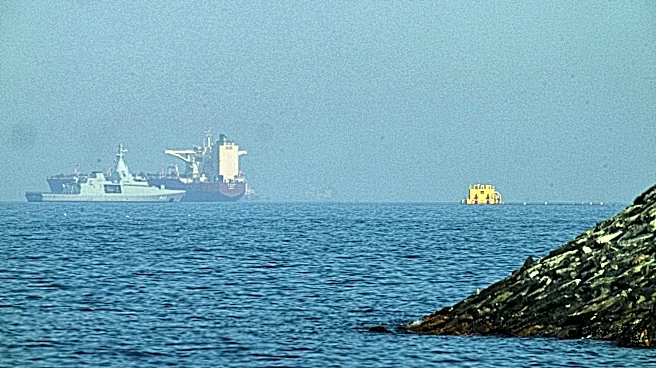
deal, citing concerns over its effectiveness in limiting Tehran's nuclear activities. This decision led to the implementation of a 'maximum-pressure' strategy aimed at curtailing Iran's oil exports and financial transactions. However, this approach has not yielded the desired concessions from Iran. Instead, Iran has expanded its nuclear capabilities, increasing its stockpile of enriched uranium and limiting international oversight. The ongoing conflict in the Strait of Hormuz, a critical chokepoint for global oil supply, has further complicated the situation. Despite a temporary ceasefire, the standoff continues, with Iran effectively controlling access to the strait, impacting global oil prices and trade.
Why It's Important?
The situation underscores the complexities of international diplomacy and the challenges of unilateral pressure tactics. The U.S. strategy has not only failed to bring Iran back to the negotiating table on favorable terms but has also allowed Iran to strengthen its nuclear position. The closure of the Strait of Hormuz has significant implications for global oil markets, affecting prices and supply chains. This development highlights the need for a more nuanced approach to foreign policy, one that considers the potential for unintended consequences and the importance of multilateral engagement. The ongoing tensions also pose risks to regional stability and could have broader geopolitical ramifications if not addressed through diplomatic means.
What's Next?
The future of U.S.-Iran relations remains uncertain, with both sides facing pressure to find a diplomatic resolution. The U.S. may need to reconsider its strategy and explore potential concessions to reopen negotiations. Iran's control over the Strait of Hormuz gives it leverage in any future talks, and the U.S. may need to address Iran's security concerns to achieve a lasting settlement. The international community will likely play a role in facilitating dialogue and ensuring compliance with any agreements reached. The outcome of these negotiations will have significant implications for regional security and global energy markets.
Beyond the Headlines
The situation highlights the importance of a robust interagency process in shaping foreign policy. President Trump's reliance on assumptions and a narrow advisory circle has contributed to the current impasse. A more inclusive approach that incorporates diverse perspectives and expertise could lead to more effective decision-making. The case also illustrates the challenges of balancing coercive measures with diplomatic engagement, emphasizing the need for a comprehensive strategy that addresses both immediate threats and long-term stability.