




What's Happening?
The United Nations Development Programme (UNDP) is undertaking initiatives in Gaza to prepare displaced Palestinians for the approaching winter by using recycled rubble from destroyed buildings. This rubble is being used to rehabilitate roads and pathways
between tents in Gaza City, aiming to improve access within displacement sites and reduce the accumulation of rainwater that previously flooded shelters. Many displaced families are living in makeshift tents, which are often dilapidated and offer inadequate protection against harsh weather. An estimated 94% of Gaza's population requires shelter and basic household assistance. The UNDP's efforts also include developing integrated transitional shelter solutions that address immediate living conditions and access to essential services, such as water, sanitation, education, and health.
Why It's Important?
The UNDP's innovative use of recycled rubble highlights the severe resource constraints and the urgent need for practical solutions in Gaza. With nearly the entire population displaced and living in precarious conditions, preparing for winter is a critical humanitarian concern. The lack of proper shelter has led to tragic consequences, including deaths from hypothermia, particularly among infants. The initiative not only addresses immediate infrastructure needs but also symbolizes resilience and resourcefulness in the face of widespread destruction. It underscores the ongoing challenges in providing basic human needs in a conflict-affected region where traditional construction materials and aid are often restricted, forcing humanitarian organizations to find alternative methods to protect vulnerable populations.
What's Next?
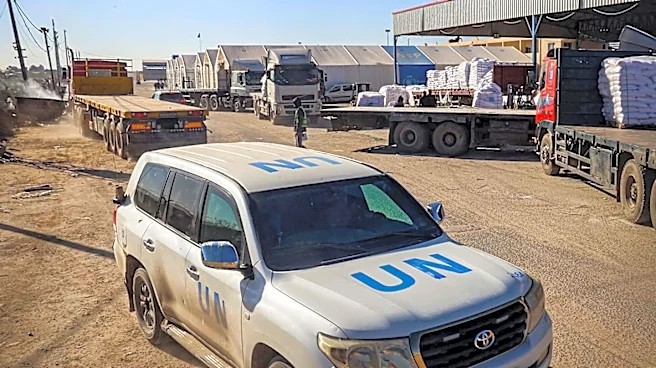
The UNDP aims to expand its approach of using recycled rubble and developing integrated transitional shelter solutions to other displacement sites in Gaza, with the goal of providing safer and more dignified living conditions. However, the success and scalability of these efforts depend heavily on sustained funding, adequate resources, and unhindered humanitarian access. The ongoing restrictions on the entry of reconstruction materials, mobile homes, and even tents into Gaza continue to pose significant challenges to long-term recovery and the provision of durable shelter options. International advocacy for the easing of these restrictions will be crucial to allow for more comprehensive and sustainable solutions for the displaced population.
Beyond the Headlines
The reliance on recycled rubble for basic infrastructure in Gaza underscores the profound and lasting impact of conflict on civilian populations and the environment. The inability to import essential construction materials forces a reliance on the remnants of destruction, turning symbols of loss into components of temporary survival. This situation raises critical questions about the long-term recovery and reconstruction of Gaza, as well as the psychological toll on a population constantly adapting to makeshift living conditions. The emphasis on 'unhindered humanitarian access' by UNDP officials points to the broader political and logistical barriers that prevent comprehensive humanitarian responses, perpetuating a cycle of dependency and vulnerability for the affected communities.