






What's Happening?
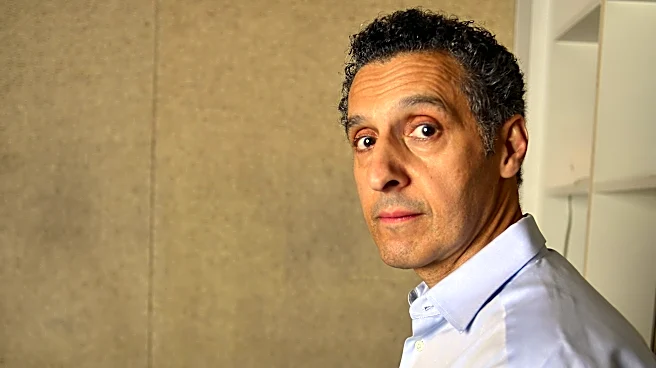
Veteran actor John Turturro, known for his extensive work in film and theater, has voiced apprehension regarding the rapid advancements in Artificial Intelligence (AI) and their potential impact on employment. Turturro, who recently starred in 'The Only
Living Pickpocket in New York,' highlighted his concern that if AI begins to displace a significant portion of the workforce, it could lead to societal unrest. He emphasized the importance of having a task or a job for individuals to contribute to society, drawing a parallel to his father's experience as a builder, which provided a sense of identity and purpose. Turturro's comments reflect a broader anxiety within various industries about the future of human labor in an increasingly automated world. He acknowledged that AI could offer benefits, particularly in fields like medicine, but cautioned against unchecked development that could lead to widespread job loss.
Why It's Important?
John Turturro's remarks underscore a growing concern among public figures and the general populace about the socio-economic implications of AI. His perspective, coming from an individual deeply embedded in the arts and entertainment industry, highlights how these technological shifts are not confined to specific sectors but are becoming a pervasive societal issue. The potential for AI to automate tasks across various industries, from manufacturing to creative fields, could lead to significant job displacement, impacting the livelihoods of millions of Americans. This could exacerbate existing economic inequalities and create new challenges for policymakers in terms of workforce retraining, social safety nets, and economic restructuring. The debate over AI's role in the economy is crucial for the U.S., as it touches upon national productivity, innovation, and social stability. Turturro's call for a balanced approach, recognizing both the potential benefits and risks, resonates with ongoing discussions about ethical AI development and responsible technological integration.
What's Next?
The conversation surrounding AI's impact on employment is expected to intensify as technology continues to evolve. Policymakers, industry leaders, and labor organizations will likely face increasing pressure to address the challenges posed by automation. This could involve exploring new educational and training programs to equip the workforce with skills relevant to an AI-driven economy, as well as considering policy frameworks that mitigate job displacement and support affected workers. Discussions around universal basic income or other forms of social support may also gain traction. Furthermore, the entertainment industry, where AI is already being used in various capacities, will likely continue to grapple with questions of intellectual property, creative control, and the role of human artists in an AI-augmented landscape. The coming years will likely see a concerted effort to balance technological progress with social responsibility.
Beyond the Headlines
Turturro's reflections on the importance of 'task' and 'contribution' delve into the deeper psychological and cultural implications of work in American society. Beyond economic concerns, the potential for widespread job displacement due to AI raises fundamental questions about human purpose, identity, and community. For many, work is not merely a means to an end but a source of meaning, social connection, and personal fulfillment. A future where a significant portion of the population lacks meaningful employment could lead to profound societal shifts, including increased social isolation, mental health challenges, and a redefinition of what it means to be a productive member of society. This ethical dimension of AI's impact, often overshadowed by economic discussions, highlights the need for a holistic approach that considers not just the financial but also the human cost of technological advancement.