



What's Happening?
In southern Myawaddy, near the Thai-Myanmar border, escalating military junta airstrikes have prompted the relocation of thousands of foreign nationals involved in illicit telecom scam operations. These individuals, primarily Chinese nationals, have been
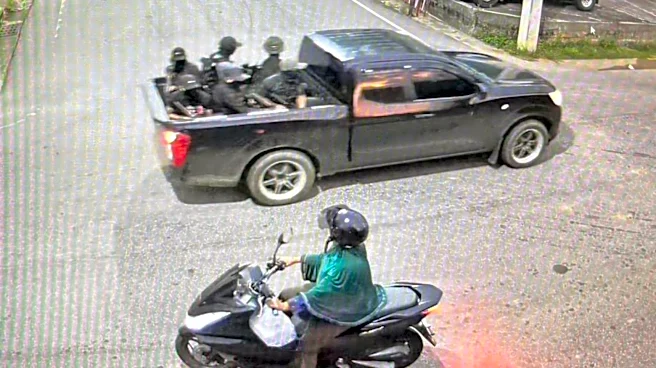
moving from the Kyaukkhet area to Sonseemyaing Village, the headquarters of the Democratic Karen Benevolent Army (DKBA). The airstrikes, which began intensifying on July 22, have caused significant displacement, with both foreign workers and local residents fleeing to safer areas, including across the border into Thailand. The DKBA has reportedly facilitated the relocation by providing transport for some of the workers. The U.S. Department of State has highlighted the area as a hub for cyber scam networks, and the FBI is collaborating with Thai authorities to address transnational cybercrime.
Why It's Important?
The situation underscores the ongoing instability in Myanmar and its impact on regional security and international crime. The displacement of telecom scam workers highlights the intersection of military conflict and organized crime, with implications for international law enforcement and cybersecurity. The involvement of foreign nationals in these operations points to the global nature of cybercrime and the challenges in addressing it. The airstrikes and subsequent relocations also raise humanitarian concerns, as civilians and workers are caught in the crossfire, leading to potential human rights violations. The international community, including the U.S., is likely to increase pressure on Myanmar to address these issues, potentially affecting diplomatic relations and regional stability.
What's Next?
The DKBA has issued an ultimatum for telecom scam operations to vacate the region by July 28, indicating a potential crackdown on these activities. The ongoing military operations and international scrutiny may lead to increased efforts to dismantle cybercrime networks in the area. The situation may also prompt further international diplomatic and humanitarian responses, as countries like the U.S. and Thailand work to address the displacement and security challenges. The junta's actions and the response from the DKBA and international actors will likely shape the future of the conflict and its impact on regional security.