
What's Happening?
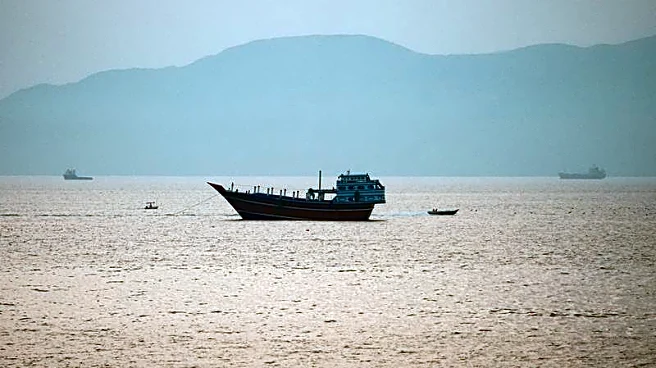
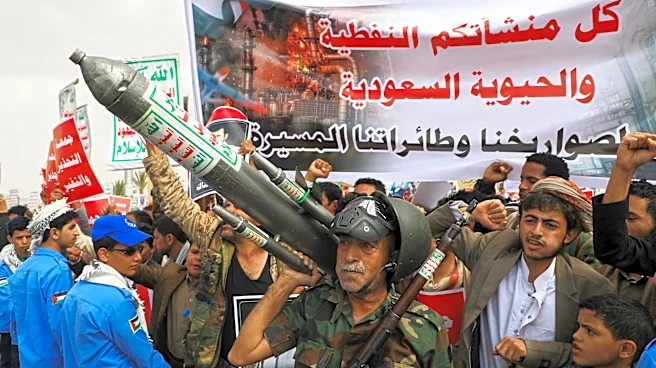
The Houthi blockade of the Bab el-Mandeb Strait has forced Saudi oil tankers to reroute, raising concerns about global oil supply disruptions. Two tankers carrying Saudi crude have reversed course in the Red
Sea, highlighting the impact of the blockade on Saudi Arabia's energy trade. The blockade threatens to disrupt one of the world's most important shipping routes, potentially affecting 6 million barrels of crude per day destined for Asia. The situation exposes vulnerabilities in Saudi Arabia's energy strategy and raises questions about alternative routes, such as the Suez Canal, to mitigate the impact.
Why It's Important?
The blockade of the Bab el-Mandeb Strait by the Houthis poses a significant threat to global oil supplies, particularly for Asian consumers who rely heavily on Middle Eastern crude. The disruption could lead to increased oil prices and longer delivery times, impacting economies worldwide. The situation underscores the strategic importance of securing maritime chokepoints and the need for alternative routes to ensure energy security. The potential economic impact highlights the interconnectedness of global supply chains and the importance of geopolitical stability in maintaining energy markets.
What's Next?
Saudi Arabia and its allies are likely to explore alternative routes, such as the Suez Canal, to bypass the Bab el-Mandeb Strait and maintain oil exports. The international community may increase diplomatic and military efforts to resolve the blockade and ensure the security of critical shipping routes. The situation could lead to increased tensions in the region and necessitate negotiations to address the underlying geopolitical issues. The outcome will have significant implications for global energy markets and regional stability.