
What's Happening?
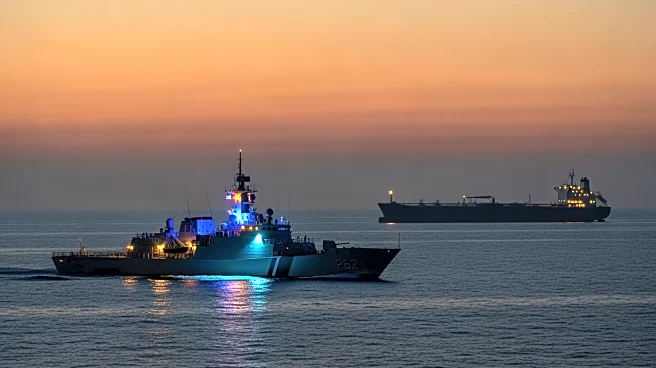
On January 22, the French Navy intercepted a sanctioned tanker named Grinch in the Mediterranean Sea. The operation was conducted under United Nations regulations, and the vessel has been diverted to France
for further inspection. The tanker, suspected of flying a false flag, was reportedly built in 2004 and falsely registered in Comoros. It is owned by a shell corporation in the Marshall Islands. The Grinch had loaded in Murmansk, Russia, and was sanctioned by the United States, EU, UK, Canada, and Switzerland for violating the G7 price cap on Russian oil. French authorities, working with allies like the UK, confirmed suspicions about the legitimacy of the flag and reported the matter to the Public Prosecutor in Marseille. The tanker, with a crew of Indian nationals, is being escorted by the French Navy for further investigation.
Why It's Important?
This interception highlights the ongoing international efforts to enforce sanctions against Russia, particularly concerning the shadow tanker fleet. The operation underscores France's commitment to disrupting illegal oil trade routes, which are crucial for maintaining the effectiveness of international sanctions. The seizure of the Grinch could strain diplomatic relations, especially with Russia, which has previously labeled such actions as piracy. The incident also reflects the broader geopolitical tensions surrounding energy security and the enforcement of international maritime laws. The involvement of multiple countries in sanctioning the tanker indicates a coordinated effort to uphold the G7 price cap on Russian oil, aiming to limit Russia's economic gains from its energy exports.
What's Next?
The tanker will undergo further investigation in France, and the findings could lead to legal actions against those involved in its operations. The French government, led by President Emmanuel Macron, has been vocal about disrupting the shadow tanker fleet, and this incident may prompt increased enforcement actions by other countries. The UK has also indicated plans to enhance its enforcement efforts, which could lead to more interceptions. Russia's response to these actions will be closely watched, as it may escalate diplomatic tensions. The European Union's recent regulations allowing member states to inspect vessels' documentation could result in more frequent inspections and potential detentions of similar vessels.