



What's Happening?
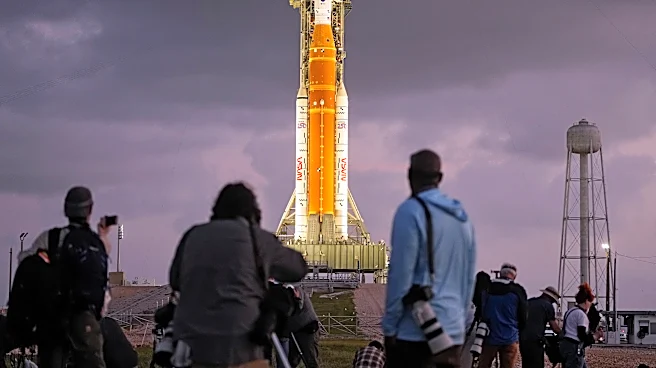
NASA is preparing for the launch of Artemis II, the first crewed mission to the Moon in over 53 years since the Apollo era. The mission is scheduled to lift off with a 32-storey Space Launch System rocket carrying four astronauts: Reid Wiseman, Victor
Glover, Christina Koch, and Canadian astronaut Jeremy Hansen. The mission will involve a flyby of the Moon, executing a quick loop around it before returning to Earth, with no landing planned. This nearly 10-day journey will conclude with a splashdown in the Pacific Ocean. The mission aims to test critical systems ahead of future crewed lunar landings. Unlike the Apollo missions, the Artemis II crew reflects greater diversity, including a woman, a person of color, and a non-American astronaut. The Artemis program is part of a broader strategy to establish a sustained human presence on the Moon, seen as vital for maintaining U.S. leadership in space exploration amid growing competition, particularly from China.
Why It's Important?
The Artemis II mission is significant as it represents a major step in NASA's efforts to re-establish a human presence on the Moon, which is crucial for future space exploration and maintaining U.S. leadership in this field. The mission's success could pave the way for more advanced lunar missions, including potential landings and the establishment of a lunar base. This initiative is also a response to growing international competition in space exploration, particularly from China, which has been advancing its own lunar exploration programs. The diversity of the Artemis II crew highlights NASA's commitment to inclusivity and reflects broader societal changes. The mission's outcomes could influence future policy decisions and funding allocations for space exploration.
What's Next?
If the Artemis II mission is successful, it will set the stage for subsequent missions that may include lunar landings and the establishment of a more permanent human presence on the Moon. NASA has a launch window extending through the first six days of April, with another opportunity later in the month if needed. The mission's results will be closely monitored by international space agencies and could influence global space exploration strategies. Future missions may also focus on utilizing lunar resources and developing technologies for long-duration space travel, potentially leading to missions to Mars and beyond.