




What's Happening?
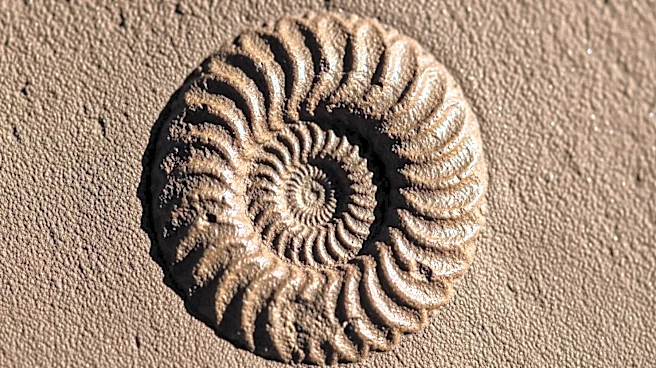
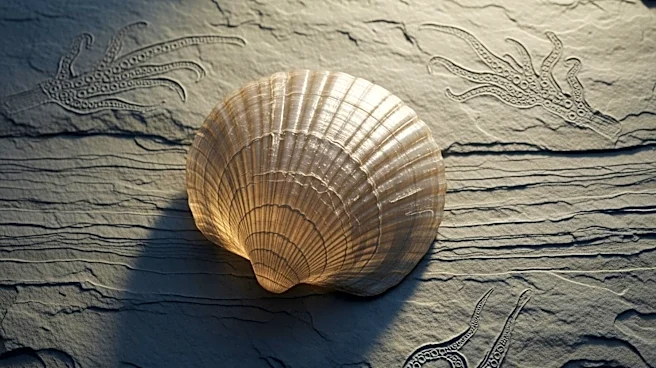
A fossil initially thought to be the world's oldest octopus has been reclassified as a nautilus relative, altering the timeline of octopus evolution. Synchrotron imaging revealed hidden teeth within the fossil, indicating it belonged to a nautiloid rather
than an octopus. This discovery suggests that octopuses appeared later, during the Jurassic period, rather than 300 million years ago as previously believed.
Why It's Important?
This reclassification significantly impacts the scientific understanding of cephalopod evolution, particularly the timeline of octopus development. By pushing the origin of octopuses to the Jurassic period, the findings align with the broader scientific consensus on the evolutionary split between octopuses and squids. This discovery also highlights the importance of advanced imaging techniques in paleontology, which can lead to new insights and corrections in the fossil record.