
What's Happening?
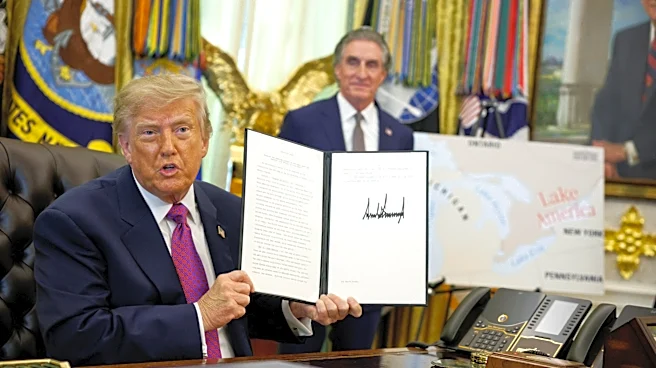
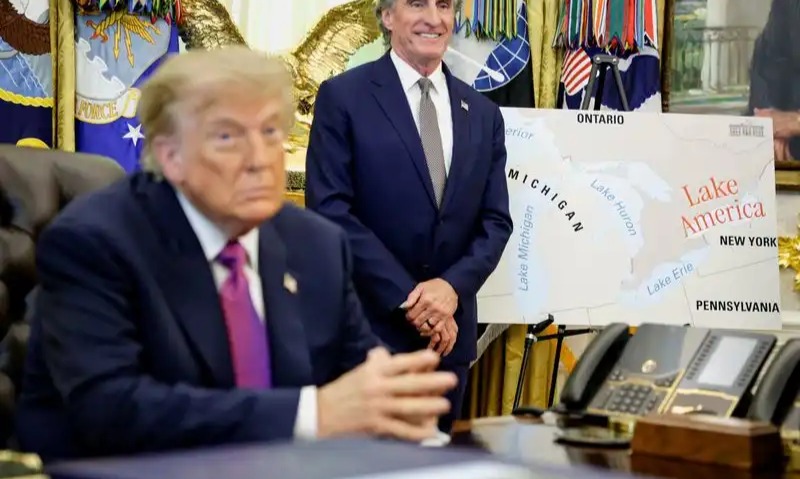
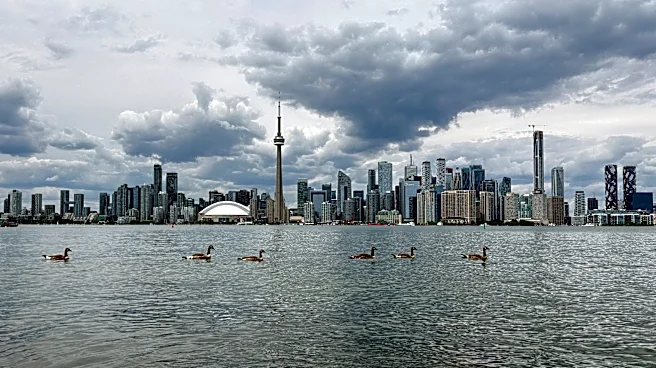
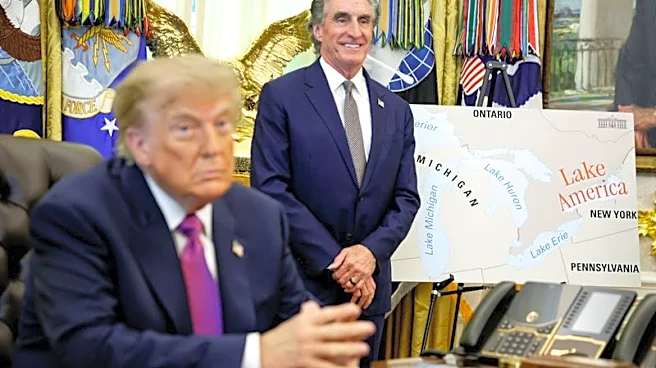
Wisconsin Governor Tony Evers responded to President Trump's executive order to rename the U.S. side of Lake Ontario as 'Lake America' by sarcastically issuing his own 'executive order' to rename Lake Michigan
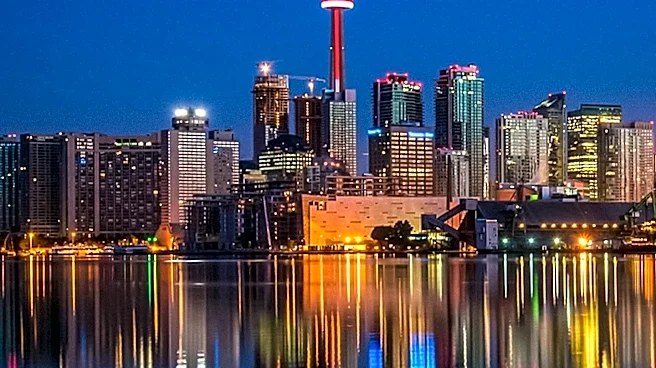
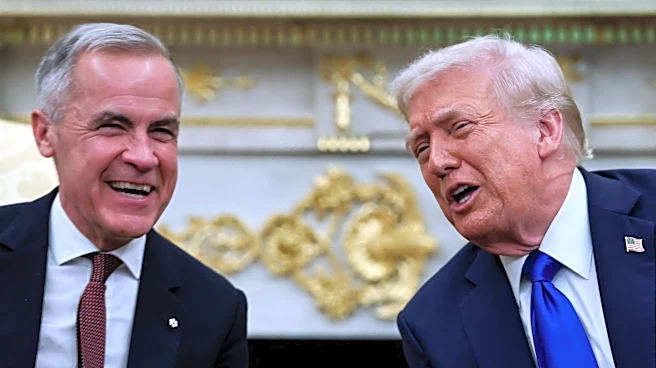
as 'Lake Wisconsin.' President Trump signed his order in the Oval Office amidst ongoing trade disputes with Canada. Governor Evers posted his humorous response on social media, stating, 'And I just renamed Lake Michigan Lake Wisconsin. See, I can sign napkins that say things, too.' This playful jab followed a similar response from Illinois Governor JB Pritzker, who announced he would 'rename' Trump Tower as 'Natalie Tower.' The original renaming of Lake Ontario by President Trump has been met with criticism from Canadian officials, including Prime Minister Mark Carney, who emphasized the lake's Indigenous roots and historical name.
Why It's Important?
This exchange highlights the growing political tensions and rhetorical sparring between state governors and the federal administration, particularly President Trump. While seemingly lighthearted, Governor Evers's action underscores a broader sentiment of dissent and frustration among some state leaders regarding federal policies and executive actions. The renaming of a significant natural landmark like Lake Ontario, even if symbolic for the U.S. side, touches upon issues of national identity, historical recognition, and international relations. The responses from Governors Evers and Pritzker serve as a form of political protest, using humor and satire to challenge the perceived arbitrary nature of federal decisions and to express solidarity with Canadian counterparts who rejected President Trump's move. This incident reflects the polarized political climate and the ways in which state leaders are engaging with federal actions.
What's Next?
The 'renaming' of Lake Michigan by Governor Evers is a symbolic gesture and is not expected to have any legal or practical implications. However, it contributes to the ongoing political narrative and could further fuel public discourse on federal overreach and the relationship between state and federal governments. It is likely that this event will be discussed in political commentary and social media, potentially influencing public opinion on the involved leaders. The underlying trade disputes with Canada, which prompted President Trump's original action, are expected to continue, and the reactions from state governors may add another layer to these complex international relations. This incident could also inspire similar symbolic acts from other state leaders in response to federal policies they oppose.
Beyond the Headlines
Beyond the immediate political theater, this event touches upon deeper themes of sovereignty, cultural heritage, and the power of naming. The Canadian Prime Minister's emphasis on the Indigenous roots of Lake Ontario's name highlights the historical and cultural significance embedded in geographical names, which often predate modern political boundaries. The attempt to unilaterally rename a shared natural resource, even partially, can be seen as disrespectful to historical context and international cooperation. The governors' sarcastic responses, while humorous, also serve as a reminder of the checks and balances within the U.S. political system, even if only through public opinion and symbolic acts. It underscores the importance of dialogue and mutual respect in governance, both domestically and internationally, especially when dealing with shared natural resources and historical legacies.